Which Charles Liang Are We Talking About?
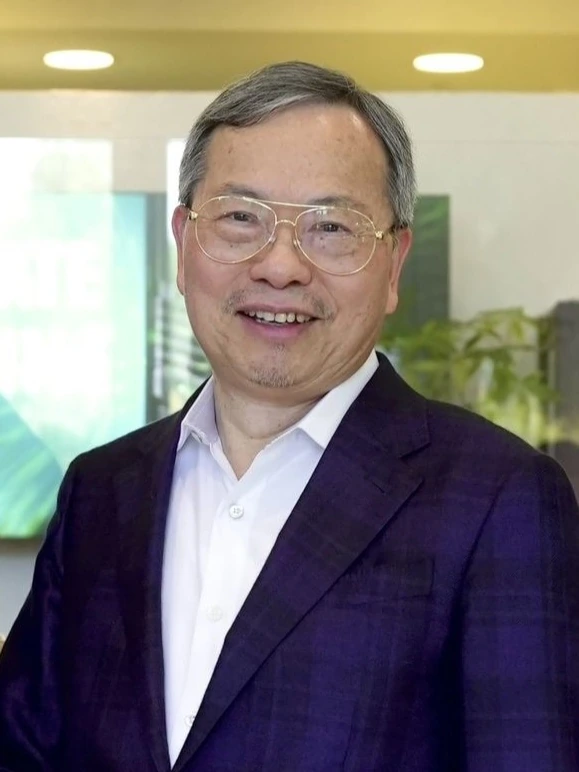
There are a handful of public figures named Charles Liang, so let's get the right one locked in first. The Charles Liang this article covers is Charles Liang Chien-Hou, born in 1956 or 1957, and best known as the co-founder, CEO, President, and Chairman of the Board of Super Micro Computer Inc., commonly called Supermicro. He founded the company in September 1993 and has held all three of those leadership titles continuously since day one. That combination of founder equity, executive tenure, and a company sitting at the center of the AI server boom is what puts him on the Forbes billionaires list. If you were searching for a different Charles Liang in finance, academia, or another field, this likely isn't your person, but the Supermicro founder is by far the most widely searched and financially notable individual with this name.
What Net Worth Actually Means Here

Net worth is the simple formula of total assets minus total liabilities. For a public company founder like Charles Liang, the dominant asset is his equity stake in Supermicro (SMCI), which trades on the Nasdaq. Because that stake is tied to a fluctuating stock price, his net worth moves up and down every trading day. Estimators like Forbes and Bloomberg take the current or a recent market price of SMCI shares, multiply it by the number of shares Liang beneficially owns (pulled from SEC filings like proxy statements and Form 4s), and add in any other known assets such as cash from stock sales, real estate, or outside investments. Then they subtract known or estimated liabilities. The result is a range, not a certified bank statement. Neither Forbes nor Bloomberg has access to Liang's personal balance sheet, so these figures are best described as well-researched estimates built on public data.
The SEC's beneficial ownership rules, as outlined in Supermicro's own proxy filings, include shares a person can acquire within 60 days, things like vested stock options or performance awards. That means the ownership figure used in wealth calculations can be slightly larger than pure share count alone. It's a small but real distinction that's worth understanding when you see a headline net worth figure and wonder exactly what's being counted.
His Net Worth Right Now
As of April 2026, Forbes lists Charles Liang's real-time net worth at approximately $1.5 billion, with the figure labeled as of April 15, 2026, and last formally updated on March 10, 2026. For the Forbes 2026 billionaires list specifically, the methodology anchors net worth to stock prices and exchange rates from March 1, 2026. Bloomberg's Billionaires Index also tracks Liang dynamically, with profile-level calculations updated on a rolling basis based on Bloomberg's own methodology. Both sources converge on him being a billionaire, though the specific figure can vary depending on the date and SMCI's share price at the time of calculation.
To put $1.5 billion in context: at Supermicro's peak in early 2024, Liang's fortune was reported to be dramatically higher, well into the multi-billion range. Bloomberg reported in August 2024 that his net worth had slumped by nearly two-thirds from a March 2024 high, with a single accounting-related event erasing more than $800 million from his estimated wealth in that period. The $1.5 billion figure represents a partial recovery from that low point. It's a clear illustration of how tightly a founder's personal net worth is coupled to one company's stock performance.
How He Built His Wealth: Career Path and Income Drivers
Charles Liang's wealth story is fundamentally a founder equity story, not a compensation story. He didn't get rich from a series of executive salaries. He built a company, held onto a large share of it for over three decades, and watched that equity grow as Supermicro became a critical player in the global server and data center market.
Before Supermicro
Before founding Supermicro, Liang served as President and Chief Design Engineer at Micro Center Computer Inc. from July 1991 to August 1993. That role gave him direct technical and operational experience in server hardware design, which fed directly into what he built next. He clearly understood the product from the ground up, not just the business side.
Founding Supermicro in 1993
Liang co-founded Supermicro in San Jose, California in September 1993. The company focuses on high-performance server and storage solutions, and has become one of the leading suppliers of AI server infrastructure. Its close relationship with Nvidia, particularly in designing servers around Nvidia's GPU architecture, put Supermicro in an exceptional position as AI infrastructure spending exploded from 2023 onward. Forbes explicitly identifies Supermicro's role as a major Nvidia AI server design and outsourcing supplier as the central context for Liang's wealth. The company went public in 2007, which was the first major liquidity event that allowed his equity stake to translate into a market-valued net worth.
Equity Compensation Structure
Beyond his founding stake, Liang's ongoing compensation is heavily equity-based. SEC Form 4 filings show a performance-based equity award structure tied to share-price milestones. This means a significant portion of his compensation is only realized if the stock performs, aligning his personal upside with shareholder returns. He has also periodically sold shares on the open market. For example, SEC Form 4 filings documented him selling SMCI common stock in June 2025 at a weighted average price around $45.00 to $45.01 per share, converting a portion of equity into cash.
Known Investments, Assets, and Financial Milestones
The dominant asset in Charles Liang's portfolio is his Supermicro equity. Supermicro's annual proxy statement and SEC filings include a "Security Ownership of Certain Beneficial Owners and Management" section that details Liang's beneficial ownership, including shares held directly, shares held through family members or related entities, and shares he can acquire through options or performance awards within 60 days. This is the core data source that wealth trackers use to peg his equity value.
Beyond the equity stake, specifics on Liang's personal real estate portfolio, outside investments, or private business holdings are not extensively documented in public sources. That's common for executives whose wealth is concentrated in a single public company. His financial milestones track almost exactly with Supermicro's corporate milestones: the 2007 IPO, the company's expansion into hyperscale data center customers, and the AI infrastructure surge that began in earnest in 2023. Each of those phases substantially increased the market value of his holdings.
Controversies, Liabilities, and Wealth-Changing Events

This is arguably the most important section for understanding why Liang's net worth figure has been so volatile, and why you should treat any single estimate as a snapshot rather than a fixed number.
The 2024 Accounting Crisis
In 2024, Supermicro became the center of a serious corporate governance controversy. The company delayed filing its annual financial report with the SEC, triggering concern about its accounting practices. In October 2024, Supermicro's auditor, Ernst & Young, resigned from the engagement, citing governance concerns. AP News reported that Supermicro's shares plunged after the company disclosed that Ernst & Young resigned as its public accounting firm, citing governance, transparency, and internal-control concerns. CNBC reported in February 2025 that the company faced delisting risk from Nasdaq as it worked to meet SEC reporting deadlines. These events sent SMCI shares into a steep decline. Bloomberg reported that the accounting delay alone erased more than $800 million from Liang's estimated net worth, and that from the March 2024 peak, his fortune had dropped by nearly two-thirds. That is a staggering wealth destruction event tied not to a business failure but to a reporting and governance crisis.
Impact on Net Worth Estimates
The accounting controversy did two things to Liang's net worth. First, it directly crushed the market value of his Supermicro holdings as the stock sold off. Second, it introduced uncertainty about whether the company's reported financial performance was fully accurate, which made it harder for analysts and wealth trackers to assign a confident value to the equity. As Supermicro worked through remediation, filed its overdue reports, and stabilized its auditor situation, the stock partially recovered, which is why his Forbes estimate rebounded to $1.5 billion by early 2026. But the episode is a permanent reminder that equity-driven net worth can move fast and move far.
Insider Stock Sales

Liang's open-market stock sales, documented through SEC Form 4 filings, are technically a shift in asset composition rather than a loss of wealth. Selling shares at $45 converts equity into cash. However, the timing and volume of insider sales are always scrutinized by investors and can signal how the CEO himself views the stock's near-term prospects. Readers tracking his net worth should watch Form 4 filings for any large sales that would meaningfully reduce his equity stake.
How to Verify the Numbers and Track Updates
If you want to track Charles Liang's net worth with any confidence, here's the practical playbook. Start with the primary sources, then use aggregators as shortcuts.
- Check Forbes' real-time billionaires profile for Charles Liang directly. It updates frequently and shows the as-of date clearly. The current figure is $1.5 billion as of mid-April 2026.
- Check Bloomberg's Billionaires Index for a second independent estimate. Bloomberg uses its own methodology and can diverge from Forbes by hundreds of millions, which is normal given different assumptions.
- Go to the SEC's EDGAR database and search for Super Micro Computer Inc. (ticker: SMCI). Pull the most recent proxy statement (DEF 14A) and look for the beneficial ownership table. This shows exactly how many shares Liang controls.
- Multiply Liang's beneficial share count by the current SMCI stock price. That gives you a rough equity value. Add or subtract what you know from there.
- Monitor SEC Form 4 filings for Charles Liang. These are filed within two business days of any insider transaction and will show you if he's been buying or selling shares and at what price.
- Watch SMCI's quarterly and annual earnings releases. Revenue growth and margin performance drive the stock, which drives the net worth estimate.
- Be skeptical of celebrity net worth aggregator sites that don't cite their sources or show an as-of date. Many recycle outdated figures without updating for stock price changes or new filings.
The single biggest variable in Liang's net worth going forward is SMCI's stock price. If you're looking specifically for Charles Penzone net worth, you can compare how different wealth sources and public data affect the estimate. For readers specifically searching for Charles Phan net worth, compare the same estimator sources and update dates to see how timing and market data change the number. As long as he holds a large equity stake, a 20 percent move in the stock translates to hundreds of millions of dollars of change in his estimated wealth. Given that AI infrastructure spending is still in flux and the company is still rebuilding its governance reputation post-2024, expect continued volatility in these estimates. The $1.5 billion figure from Forbes in April 2026 is the most current credible data point, but treat it as a moment-in-time estimate, not a permanent fact.
For context, Charles Liang occupies an interesting tier among notable business figures named Charles. His wealth is tied almost entirely to a single public company he built from scratch, which makes his financial profile more volatile but also more transparent than someone whose assets are spread across private holdings. Other Charles figures tracked in wealth research, such as Charles Wang (the CA Technologies founder) or Charles Zhang (Sohu. For readers searching for the Charles Zhang net worth angle, this article explains why estimator-based net worth figures can swing quickly. If you are also interested in Charles and Lynn Zhang net worth, use the same approach and compare sources and update dates. If you are also looking for Charles Phoenix net worth, compare the figures using the same estimator sources and update dates discussed here. Charles Wang is another tech founder mentioned in wealth research, and his net worth is often discussed separately from Liang’s Charles Wang (the CA Technologies founder). com), built their fortunes through similar tech-company-founder paths, though the specific industries, timelines, and outcomes differ significantly. What makes Liang's case distinctive is the direct AI infrastructure tailwind that put Supermicro back in the spotlight after years as a niche player, and then the abrupt governance crisis that tested how durable that wealth really was.
| Factor | Detail |
|---|
| Confirmed identity | Charles Liang Chien-Hou, born 1956/1957 |
| Role | Co-Founder, CEO, President, Chairman — Supermicro (since 1993) |
| Forbes net worth (Apr 2026) | $1.5 billion (as of 4/15/26) |
| Primary wealth source | Supermicro (SMCI) equity stake |
| Peak estimated wealth | Multi-billion (early 2024, pre-accounting crisis) |
| Major wealth-reducing event | 2024 accounting delay and auditor resignation; ~$800M+ erased per Bloomberg |
| Best public data sources | Forbes billionaires profile, Bloomberg Billionaires Index, SEC EDGAR (DEF 14A, Form 4) |
| Key tracking metric | SMCI share price × beneficial ownership share count |