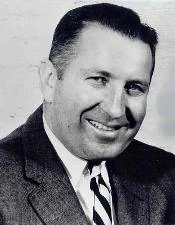
Charles Fipke's net worth is most commonly estimated at a minimum of $8 million based on publicly tracked shareholdings, but that number almost certainly understates his real wealth. The more meaningful figure, when you factor in his 10% stake in Canada's first commercial diamond mine and decades of ongoing mining investments, likely puts him in the tens of millions of dollars range, though no single verified public disclosure captures the full picture.
Charles Fipke Net Worth: Estimate, Sources, Timeline

Marcus Rothwell
21 Jun 2026

Who Charles Fipke is and why people look up his net worth

Charles Edgar "Chuck" Fipke (born 1946) is a Canadian geologist and prospector from British Columbia who pulled off one of the most dramatic wealth-creation stories in modern mining history. Starting in the early 1980s, Fipke spent nearly a decade trudging across Canada's Northwest Territories, chasing a geological theory that the region contained kimberlite pipes, the volcanic rock formations that carry diamonds to the surface. Most of the industry thought he was wasting his time. He wasn't.
Working alongside partner Stewart Blusson, Fipke identified the Lac de Gras diamond deposits in the late 1980s and early 1990s. That discovery became the foundation for the Ekati diamond mine, which opened in 1998 as Canada's first commercial diamond mine. Fipke had founded Dia Met Minerals as the vehicle to hold and develop those claims, and when the mining world realized what he'd found, the story exploded into mainstream financial media, including a Forbes profile in 1998. Forbes (1998) profiles Charles Fipke and places his diamond exploration outcomes and their significance in Canada in mainstream, contemporaneous context Forbes profile in 1998. People search his net worth because his story is a classic prospector-becomes-millionaire arc, the kind that makes both mining investors and general readers curious about what the discovery actually paid out.
The current net worth estimate and why the numbers vary
As of 2026, GuruFocus pegs Charles Edgar Fipke's net worth at "at least $8 million" based on a snapshot of his publicly reported shareholdings taken around April 19, 2026. MarketScreener similarly tracks his insider holdings, with a profile dated around April 29, 2026, using a comparable methodology. Both figures are derived from publicly disclosed equity positions, not a full accounting of his assets.
The gap between those numbers and his probable real wealth is significant. If you are comparing how public-figure net worths are estimated, you can use a similar approach when looking up Charles o Finley net worth alongside other insider-driven valuations. Neither platform captures private business interests, mineral claims, royalty arrangements, real estate, or illiquid assets. Fipke retained a 10% interest in the Ekati mine's core zone and buffer zone after BHP (later Bhpbilliton) became the operator. When BHP sold its interest in 2012 to Harry Winston (which became Dominion Diamond) for approximately $500 million, that transaction set a benchmark for what the mine was worth commercially. A 10% stake in an asset of that scale represents a very different wealth story than $8 million in public stock holdings suggests.
| Source | Estimate | Methodology | Snapshot Date |
|---|---|---|---|
| GuruFocus | At least $8 million | Public shareholdings from insider filings | April 19, 2026 |
| MarketScreener | Holdings-based figure | Insider portfolio tracking | April 29, 2026 |
| Ekati stake inference | Tens of millions (estimated) | 10% mine ownership + transaction history | Historical, no live tracking |
The milestones that built his wealth

Fipke's financial story has a few clear turning points, and understanding them helps you judge the net worth estimates you'll encounter.
The long exploration phase (early 1980s to 1991)
For roughly a decade, Fipke was more expense than asset. He was funding or part-funding exploration across the Northwest Territories, developing proprietary heavy-mineral sampling techniques, and operating with limited external capital. A 1998 Deseret News profile describes this as a grinding, underfunded pursuit that most geologists dismissed. This phase built the intellectual and geological foundation for everything that followed, but it was not a wealth-accumulation period in the conventional sense.
Dia Met Minerals and the discovery announcement (1991 to 1998)
The moment the Lac de Gras kimberlite discovery became public, Dia Met Minerals became one of the most talked-about stocks in Canadian mining. Fipke had founded Dia Met as his exploration vehicle, and its share price surged dramatically after the discovery was confirmed. BHP eventually partnered on the development of the Ekati mine, with Dia Met and Fipke retaining ownership stakes. The mine opened in 1998, producing rough diamonds commercially for the first time in Canadian history. That milestone converted years of speculative geology into real, producing-asset wealth.
Divorce proceedings and shareholding redistribution
The BC Securities Commission records include an exemption order involving Marlene Fipke and an offer to acquire shares of Dia Met Minerals from Charles Fipke pursuant to a divorce settlement. This is a documented wealth-redistribution event that likely affected his net worth meaningfully. Divorce settlements involving significant publicly traded stakes can shift wealth significantly, and The Northern Miner covered how the divorce-related shareholding changes became a market event in their own right, given Fipke's position in Dia Met.
Post-Ekati investments and Cantex Mine Development
Fipke didn't stop after Ekati. He continued pursuing mineral exploration through joint venture agreements and has been actively involved with Cantex Mine Development, a junior mining company. A dated joint venture agreement naming “Dr. Charles Fipke” describes mineral exploration venture terms, including an option to earn a larger stake by funding further exploration, illustrating the kind of later-stage investment structure he used beyond the Ekati story. A Cantex information circular from February 2026 lists approximately 37.9 million common shares held through a numbered company associated with Fipke. In April 2022, he subscribed for 781,250 units in a Cantex private placement for a total of $250,000, and Canadian Insider records show him acquiring Cantex shares in July 2021 at around $0.50 per share. These ongoing investments show he's still an active mining-sector participant, not someone living off a single historical windfall.
How net worth estimates are built and which sources to trust

Most of the Fipke net worth figures you'll find online come from insider-holdings aggregators, not from any verified personal financial disclosure. Here's how those platforms work and what to make of their numbers.
- GuruFocus and MarketScreener pull from publicly filed insider transaction data (equivalent to SEC Form 4 filings and their Canadian equivalents), summing up the market value of shares held based on the most recent reported price after a stated cutoff date.
- These figures only reflect publicly traded equity. Private company stakes, mining claims, royalties, real estate, and personal assets are entirely excluded.
- Both platforms explicitly warn that their estimates may not represent actual net worth, which is an important caveat buried in the methodology notes.
- Canadian Insider is a useful supplementary tool that tracks specific insider buy and sell transactions with share counts, prices, and dates, making it more useful for understanding transaction behavior than for total wealth estimation.
- For verified primary data, SEDAR (Canada's System for Electronic Document Analysis and Retrieval, now SEDAR+) is the authoritative source for Fipke's historical Dia Met filings, and BC Securities Commission records provide documented legal context around major ownership events.
The most trustworthy approach is to treat the $8 million GuruFocus figure as a floor for his publicly trackable equity, not a ceiling or even a midpoint for total wealth. For someone with a decade-long operating mine interest and continued active investment in junior mining, the real number is almost certainly higher.
How his wealth figures have shifted over time
Fipke's wealth trajectory has had several distinct chapters, and the reported numbers have shifted accordingly.
- Pre-1991: Minimal documented wealth, high speculative exposure through exploration funding and Dia Met shareholding.
- 1991 to 1998: Wealth surged as Dia Met's stock value climbed following the discovery announcement and through the mine development period. This was probably his peak paper-wealth moment, with the stock market doing the heavy lifting.
- Late 1990s to early 2000s: Divorce proceedings and related share transfers to Marlene Fipke created a documented redistribution of Dia Met assets, likely reducing his net position significantly from its peak.
- 2012: BHP's sale of its Ekati interest to Harry Winston for approximately $500 million established a transaction value for the mine, which anchors any reasonable valuation of Fipke's residual 10% interest in that era.
- 2020s: Ongoing junior mining activity through Cantex and joint venture agreements keeps him as an active investor. Cantex share purchases in 2021 and 2022 show continued capital deployment into speculative mining assets, while the 2026 Cantex circular confirms he holds tens of millions of shares in the company.
The key point is that net worth estimates for someone like Fipke are highly sensitive to both the commodity cycle (diamond prices, gold prices for other ventures) and the specific valuation dates used. A snapshot taken when Cantex shares are depressed looks very different from one taken during a financing run-up.
How to handle conflicting numbers when you see them
If you Google Charles Fipke's net worth, you'll likely see a range of figures that don't agree with each other. Here's how to read those conflicts practically.
- Always check the methodology first: Does the site explain how it calculated the number? Holdings-based estimates like GuruFocus are narrow by definition. Speculative "celebrity net worth" aggregators often inflate figures with no disclosed sourcing.
- Look at the date: A figure from 2018 reflects a completely different set of asset values than one from 2026, especially for someone exposed to volatile junior mining stocks.
- Distinguish equity from total wealth: A $8 million public equity figure and a probable real wealth figure in the tens of millions are both technically "estimates," but they're measuring different things.
- Check primary records when it matters: For serious research, SEDAR+ (sedarplus.ca) holds historical Dia Met filings, and the BC Securities Commission site (bcsc.bc.ca) holds the exemption orders and related documents around the Fipke divorce/Dia Met share transactions.
- Treat any figure without a disclosed methodology with appropriate skepticism, especially numbers that appear without a source citation or snapshot date.
Where Fipke's wealth fits in the broader mining wealth picture
Fipke's story is worth contextualizing against other wealth narratives on this site. His arc is closer to a self-made discovery story than to inherited or institutional wealth. The comparison that naturally comes to mind is someone like Charles Feeney, another figure who built and redistributed significant wealth through unconventional means, or even Charles O. Finley, who converted a single concentrated asset (ownership of a sports franchise) into a net worth story that doesn't reduce to a simple number. Fipke's case is similar: a single discovery, a concentrated asset position, a legal wealth-redistribution event, and then continued reinvestment into high-risk junior mining. None of that maps cleanly onto a single headline number.
The most useful practical takeaway: if you're researching Charles Fipke's net worth for investment context, journalism, or general curiosity, the $8 million floor from GuruFocus is your verified minimum for public equity. His real wealth, accounting for historical mine stakes, private interests, and decades of accumulated assets, is plausibly several times higher, but no public source has put a fully verified figure on it. That's not unusual for a private Canadian citizen who isn't required to make comprehensive wealth disclosures, but it does mean you need to read any headline number critically and check what it's actually measuring.
FAQ
Why do Charles Fipke net worth estimates vary so much from one site to another?
Most listings rely on a dated snapshot of publicly traded shareholdings, then multiply by current market prices. If the snapshot date lands during a diamond or junior-miner selloff or rally, the implied net worth can swing sharply even when the underlying holdings did not change much.
Does the “at least $8 million” figure mean his net worth is close to $8 million in real life?
Not necessarily. Treat it as a verified floor for publicly trackable equity, not as total wealth. If he still holds mineral-related interests, royalty arrangements, or illiquid shares that are not fully captured by aggregators, his true net worth could be several multiples higher.
How much do illiquid assets and mineral interests skew Charles Fipke net worth calculations?
They can skew them heavily. Mineral claims, royalties, and non-public or thinly traded interests are often omitted or valued with weak proxies. Even when shares are public, liquidity discounts and holding-structure complexity can make “market price times shares” a poor substitute for realizable value.
How should I interpret “10% stake in Ekati” when comparing it to share-based net worth sites?
A mine stake is usually about economic value from production and sale potential, not just the current public stock price. If his stake is partially buffered, held through specific zones, or involves contractual terms, the realizable value may not move in lockstep with equity markets, so it will not map cleanly onto aggregator totals.
What role does the commodity cycle play in Charles Fipke net worth changes?
A major one. Diamond prices, investor appetite for kimberlite-related stories, and broader risk-on sentiment for juniors can all change valuation multiples. That means his publicly reported equity value can rise and fall even if exploration or operations are progressing steadily.
Do divorce-related share transfers affect net worth estimates long after the event?
Yes. If a settlement shifted ownership into different vehicles, or if shares were sold gradually rather than all at once, the later market tracking records can look inconsistent. You may see lower insider-held shares afterward, even though his overall wealth may still include other assets captured imperfectly by public databases.
Are insider-holdings aggregators like GuruFocus and MarketScreener accurate enough to trust?
Useful for floors and direction, but not sufficient for a full accounting. They typically miss private holdings, certain partnership interests, and arrangements that do not surface as straightforward insider equity positions. A good practice is to treat their numbers as minimums for publicly visible equity, then look for additional disclosed shareholdings in filings and circulars.
Why would Charles Fipke net worth look lower during some years even if he is still investing?
Because new investments in juniors may not offset valuation declines from existing positions. If he buys shares at low prices during a downturn, his share count may increase, but the market value of those holdings can still lag, and some holdings may also be held through numbered entities that are harder to match across sources.
How can I check whether a net worth estimate is using the right holdings and not double-counting?
Look for whether the estimate ties shares to specific reporting vehicles, then compare share counts across the most recent circulars, private placement disclosures, and insider transaction records. When holdings are held through a numbered company, some sites may partially attribute them, causing either undercounts or occasional double-counting.
If Charles Fipke is a private individual, what is the most realistic way to estimate his net worth?
Use public equity floors for verifiable holdings, then model additional value conservatively for illiquid mining or mineral-related interests. Focus on disclosed stakes and dated transaction benchmarks, and avoid treating headline “net worth” figures as audited totals.
What is the best way to use the information if I’m doing investment or journalism research?
Pin each figure to its valuation date and list what it includes, publicly traded shares only versus shares plus other interests. When comparing years, normalize for market conditions, and prioritize primary documents like information circulars and transaction notices over general net worth aggregators.
Next Article
Charles Feeney Net Worth: Updated Estimates and Context
Charles Chuck Feeney net worth explained with credible estimates, philanthropy context, and why figures differ over time