Charles Franklin Kettering's net worth at the time of his death in 1958 is estimated at roughly $50 million to $75 million in period dollars, which translates to somewhere between $530 million and $800 million in today's money when adjusted for inflation. That range isn't a single verified figure from a public estate filing, it's a reasonable reconstruction based on what we know about the DELCO sale proceeds, his 27-year executive compensation at General Motors, his 186 patents, and the philanthropic capital he deployed late in life. It makes him one of the wealthiest inventor-executives of the early 20th century, comfortably in the same tier as other industrial-era engineer-entrepreneurs.
Charles Kettering Net Worth: Estimates, Sources, and Context

Marcus Rothwell
15 May 2026
Who Charles Kettering Was (and Why His Net Worth Gets Searched)

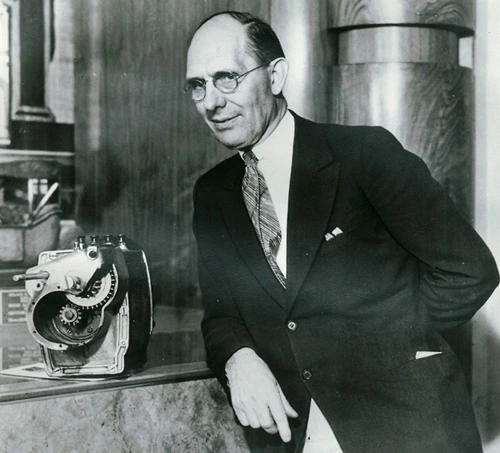
Charles Franklin Kettering was born on August 29, 1876, near Loudonville, Ohio, and died on November 25, 1958, in Dayton, Ohio. He was an inventor, engineer, and businessman whose fingerprints are on technologies most people still use without knowing his name: the electric self-starter that replaced the hand crank on automobiles, leaded gasoline additives that boosted engine performance, and early air-cooled engine experiments that shaped decades of automotive engineering. He held 186 patents by the end of his career and co-founded what became one of the most important industrial research labs in American history.
People search his net worth for a few different reasons. If you're specifically trying to gauge Charles Kuhn net worth, it helps to start from the sources those estimates rely on rather than just the headline number. If you are specifically looking for Charles R. Kaye net worth, note that his wealth story is tied to modern finance sources rather than Kettering's historical reconstruction approach. Some are students or researchers curious about how inventor-entrepreneurs of his era translated ideas into wealth. Others are fans of business history comparing early 20th-century industrialists. And some are simply curious whether someone that important to modern automotive life actually got rich from it. The answer is yes, significantly so. But because he died in 1958 and left behind a philanthropic legacy rather than a publicly traded fortune, the numbers require some reconstruction.
How Kettering Built His Wealth: Career Timeline and Income Sources
Kettering's wealth-building story breaks into three distinct phases. The first is his early inventor phase at National Cash Register and then through the founding of DELCO. The second is the DELCO sale, a single transaction that made him wealthy almost overnight. The third is his long, salaried executive career at General Motors, where he served as Vice President of the GM Research Corporation from 1920 to 1947.
Phase 1: NCR, DELCO, and the Self-Starter
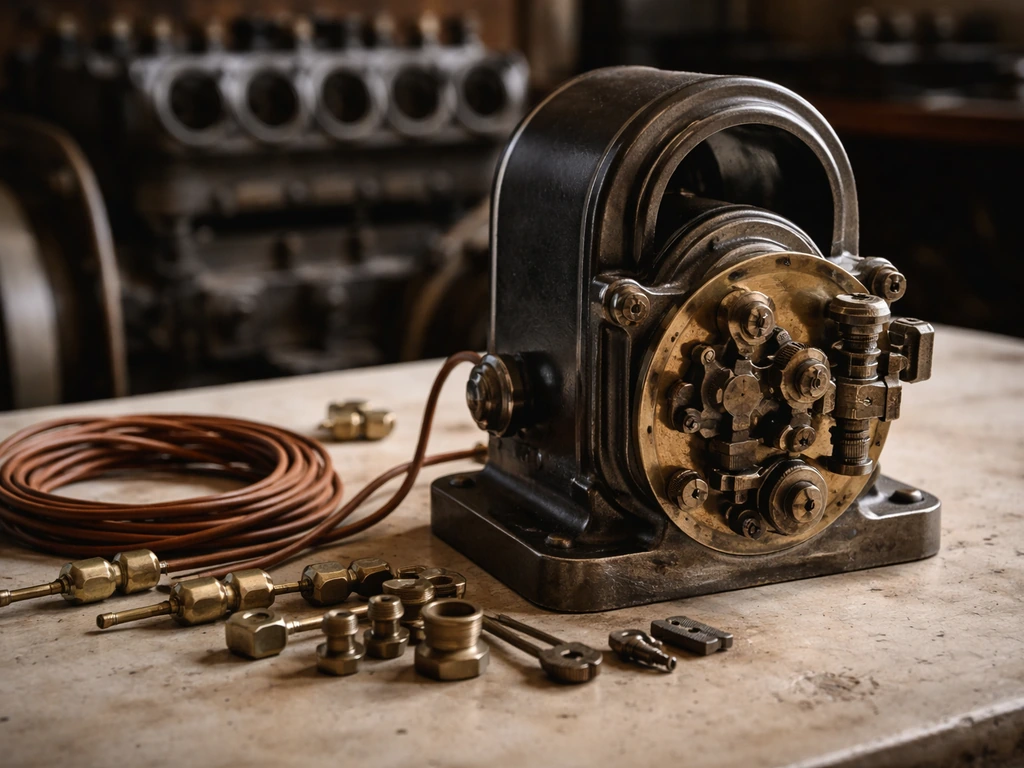
Kettering worked at National Cash Register before co-founding the Dayton Engineering Laboratories Company, known as DELCO, with his partner Edward Andrew Deeds. DELCO's breakthrough product was the electric self-starter for automobiles, which Cadillac adopted in 1912. Within roughly a year of commercial sales around 1916, DELCO was reportedly moving $2.5 million worth of starters annually. That revenue base is what made DELCO an attractive acquisition target and set up the biggest financial event of Kettering's early career.
Phase 2: The DELCO Sale
In 1916, Kettering and Deeds blank" rel="noopener noreferrer">sold DELCO to Billy Durant's United Motors Corporation for approximately $2. blank" rel="noopener noreferrer">Dayton Innovation Legacy describes Kettering’s partner role with Edward Andrew Deeds and notes that in 1916 Kettering and Deeds sold DELCO to Billy Durant’s United Motors for cash and stock. 5 million in cash and stock. United Motors was later folded into General Motors, which meant that stock became GM equity. In 1918, depending on the source, Kettering formally became head of General Motors Research. The DELCO sale alone, in today's purchasing power, represents somewhere between $70 million and $80 million. That single transaction was the foundation of his wealth, and the GM stock component meant his holdings grew alongside one of the dominant corporations in American industrial history.
Phase 3: 27 Years as a GM Executive
From 1920 to 1947, Kettering served as Vice President of the General Motors Research Corporation. No specific annual salary figures have surfaced in public historical records, which is a genuine gap in the data. But a senior GM vice president with his profile in that era would have drawn substantial executive compensation for nearly three decades on top of the equity and patent income already in play. He also organized the Dayton Research Laboratories, which became the foundation for GM's research division, an institutional contribution that likely came with equity arrangements and bonuses beyond base salary.
Estimated Net Worth Ranges and What They Actually Mean

When you see a net worth figure for a historical figure like Kettering, it's almost always an estimate built from known data points rather than a verified estate value. Here's how those estimates are typically constructed, and what assumptions underpin the range.
| Wealth Component | Historical Value (Approx.) | Inflation-Adjusted Today (Approx.) | Confidence Level |
|---|---|---|---|
| DELCO Sale (1916) | $2.5M cash + stock | $70M–$80M | High — multiple sources confirm |
| GM Stock Holdings (appreciated) | Unknown exact shares | Potentially $100M+ | Medium — inferred from sale terms |
| Executive Salary (27 years, GM) | Not publicly documented | Estimated $20M–$40M cumulative | Low — no primary salary records found |
| Patent Royalties and Licensing | Not itemized publicly | Estimated $10M–$30M | Low — inferred from patent volume |
| Philanthropic Disbursements (deducted) | Tens of millions given away | Reduces estate value significantly | Medium — foundation records exist |
The inflation adjustment methodology matters here. Using CPI-based conversion, $1 in 1958 (the year he died) is worth roughly $10.50 to $11.00 in 2026 dollars. If his estate at death was in the $50 million to $75 million range, which is the most commonly cited ballpark, that converts to roughly $525 million to $825 million today. Because of that, anyone searching for Charles Kaye net worth should treat any numbers about him as estimates unless they trace back to primary records. Secondary sources on celebrity and historical net worth sites often anchor around $75 million in today's dollars, but that figure appears to reflect only partial accounting and likely underestimates the GM equity appreciation. A more complete reconstruction pushes the range higher.
Major Financial Milestones: Patents, Sales, Salaries, and Business Ties
Kettering's financial milestones are worth mapping chronologically because each one compounded on the last. His inventiveness wasn't just intellectually productive, it was commercially structured in a way that kept generating revenue across multiple channels simultaneously.
- 1909: Files early automotive patents including motor starting device technology (US1913887A), establishing foundational IP that would be tied to DELCO's commercial products.
- 1912: Electric self-starter adopted by Cadillac, immediately creating commercial demand for DELCO's manufacturing output.
- 1913–1916: DELCO scales starter production to $2.5 million in annual sales, building the enterprise value that makes the 1916 sale possible.
- 1916: Sells DELCO to United Motors for $2.5 million in cash and stock — the single largest financial event of his career and the foundation of his long-term wealth.
- 1918: United Motors folds into GM; Kettering's stock converts to GM equity and begins appreciating alongside the company's postwar growth.
- 1920: Named Vice President of GM Research Corporation, a salaried executive role he holds for 27 years, adding cumulative compensation to his wealth base.
- 1920s–1940s: Continues filing patents across automotive, medical, and aviation domains — including ignition systems (US1233369A, US1102593A) and medical innovation patents like the artificial fever device (US2098295A) — keeping a diversified IP portfolio active.
- 1945–1950s: Begins large-scale philanthropic deployment, including major funding toward what becomes the Sloan-Kettering Memorial Cancer Center and the establishment of the Kettering Foundation, reducing taxable estate but cementing legacy.
- 1947: Retires from GM, ending salaried income but retaining equity holdings and investment assets built over decades.
- 1958: Dies in Dayton, Ohio, with an estate representing one of the largest accumulated by an American inventor-executive of his generation.
Spending, Philanthropy, and Financial Legacy
Kettering was not a conspicuous spender in the mode of the Gilded Age robber barons. His lifestyle was comfortable but grounded in his Ohio roots. The more notable financial story on the spending side is what he gave away. He co-founded the Sloan-Kettering Memorial Cancer Center in New York, one of the world's leading cancer research institutions, which required substantial capital commitment. He also established the Charles F. Kettering Foundation, which the Wikipedia entry for the foundation describes as focused on inventive research, science education, energy conservation, and medical research, reflecting his career-long intellectual interests.
The philanthropic disbursements are financially significant in two ways. First, they reduced the size of his taxable estate. Second, they mean that the "net worth" figure typically cited doesn't capture the full economic footprint of his wealth, some of it had already been deployed into institutional assets before his death. The Kettering Foundation remains active today, and its modern Form 990-PF filings are publicly available through ProPublica's Nonprofit Explorer, though those filings reflect current officer compensation and operational finances, not Kettering's historical personal wealth.
His legacy also lives on institutionally through Kettering University in Flint, Michigan (formerly GMI Engineering and Management Institute), and through the SAE patent archive awarded to that institution, which includes patents credited to Kettering himself. These institutional links make his intellectual property legacy traceable even if the financial flows from those patents aren't fully documented.
How Kettering Compares to Related "Charles" Figures
If you landed here searching for a different Charles with a similar name, it's worth a quick disambiguation. Charles Foster Kane net worth queries are usually about comparing legendary media myths to real-world wealth building, so they come up alongside discussions of historical fortunes like Kettering's. Charles Kettering the inventor-engineer is a distinct historical figure from any contemporary or entertainment-world Charles you might be thinking of. Other figures covered on this site, including Charles K. Kao, the Nobel Prize-winning physicist behind fiber optic communication, and various contemporary Charles figures in finance and entertainment, represent very different wealth accumulation patterns and timescales. Charles K. Kao net worth is often discussed separately because his wealth model came from academic prestige and licensing rather than from industrial equity stakes like Kettering's. Kao, for instance, built his wealth through academic prestige and licensing rather than equity stakes in industrial enterprises. Kettering's model was more entrepreneurial: co-found a company, scale it fast, sell it to a larger player, take the equity, and then leverage executive positioning at that larger player for decades.
The historical-versus-contemporary split is also worth flagging for readers who follow profiles of figures like Charles Kaye or Charles Kantor in modern finance. If you meant a different person named Charles Kantor, you can look up his net worth profile separately Charles Kantor net worth. Those wealth profiles draw on recent SEC filings, disclosed compensation, and trackable fund performance. Kettering's profile is reconstructed from historical sources, making it inherently less precise, but also more interesting from a financial history standpoint, because you're watching a wealth accumulation model that doesn't really exist anymore: the patent-holding, company-founding, executive-tenure trifecta that defined early 20th-century American industrial wealth.
How to Verify and Update These Numbers

If you want to go beyond the estimates here and verify or refine the figures, there are concrete steps you can take. The honest caveat upfront: no single primary source publishes a verified Kettering estate value, so all net worth figures for him are reconstructions. Here's how to evaluate what you find.
- Start with the National Academy of Sciences biographical memoir on Kettering — it's a scholarly, peer-reviewed biography that covers career milestones and is freely available as a PDF. It won't give you salary figures but gives you the authoritative career timeline to anchor any financial reconstruction.
- Cross-reference the DELCO sale against multiple sources. The $2.5 million sale figure appears in Wikipedia, Invention and Technology Magazine, and the Automotive History Review. Consistency across independent sources increases confidence in that data point.
- Use the Bureau of Labor Statistics CPI inflation calculator (bls.gov) to convert historical dollar figures yourself. Don't trust third-party net worth sites that claim a specific inflation-adjusted figure without showing their conversion methodology.
- Search the Charles F. Kettering Foundation's Form 990-PF filings on ProPublica Nonprofit Explorer for the foundation's asset base. While this reflects current organizational finances rather than Kettering's personal estate, it gives you a sense of the institutional wealth he seeded.
- Check Google Patents for Kettering's full patent portfolio by searching his name as inventor. Each patent family represents a potential licensing or royalty revenue stream, and the filing dates help you map when those income sources were active.
- Use the National Aviation Hall of Fame and Franklin Institute biographical materials to corroborate career phases — especially the WWII-era work on guided missiles and aircraft, which represented additional government contracting revenue streams not always captured in civilian wealth estimates.
- Be skeptical of any net worth site that gives a single clean number (like exactly $75 million) without explaining whether that's a historical figure or inflation-adjusted, and without sourcing the methodology. Single clean numbers for historical figures almost always reflect copying from another low-quality source rather than original research.
- For GM executive compensation context, search historical automotive industry compensation studies or business history archives at university libraries. Wayne State University's Walter P. Reuther Library and the Hagley Museum and Library in Delaware both hold GM corporate history materials that may include executive pay records.
The red flag to watch for: if a site claims Kettering's net worth in today's dollars is under $10 million, they're almost certainly only accounting for one data point and ignoring the GM equity and executive career. Conversely, claims above $1 billion in today's dollars would require documented stock appreciation that hasn't been publicly established. The credible range sits between roughly $500 million and $850 million in 2026 purchasing power, wide because the underlying data is incomplete, but anchored by the verified DELCO sale and the documented length and seniority of his GM career.
FAQ
Why does Charles Kettering’s net worth look so much higher after inflation?
Because the commonly cited $50 million to $75 million figure is tied to 1958 period dollars. When you convert using a CPI-style method, the purchasing power multiplier is roughly around 10.5 to 11 times, which is why many “today’s money” estimates jump into the hundreds of millions.
What would change the estimate the most, the GM equity growth or the DELCO sale value?
GM equity growth usually matters more. The DELCO sale gives a more concrete starting point, but the later value depends on how much GM stock he held, how long he kept it, and whether any sales, diversifications, or gift transfers occurred. Different assumptions about those holdings are a major reason you see a wide range.
Did Kettering actually get a large salary from GM, or was it mostly bonuses and stock?
Public historical records typically do not provide clean year-by-year salary totals for him. For an executive in that era, a meaningful portion would often be structured as stock, deferred compensation, and discretionary bonuses, so “salary-based” reconstructions can understate his total wealth if they ignore equity incentives.
Do the 186 patents directly translate into personal cash for Kettering’s net worth?
Not in a simple, direct way. Patents can influence value through licensing revenue, internal use, and company bargaining power, but many patents in industrial settings do not produce large royalty checks to the inventor personally. That’s one reason net worth reconstructions lean more on the DELCO acquisition proceeds and executive equity than on patent-by-patent royalty accounting.
How should I interpret “net worth” for someone who died in 1958 without a clearly published estate filing?
Treat it as an economic reconstruction, not a ledger. Since there is no single publicly verified estate value, estimates combine sale proceeds, plausible investment outcomes, and adjustments for philanthropy. Any figure you see should be checked for whether it explains how it handled equity appreciation and giving.
What effect does Kettering’s philanthropy have on net worth numbers?
It can lower the size of the estate that was left at death, but it can also reduce what you observe as “net worth” at any later reference date. If philanthropic gifts happened before death and into institutional endowments, the money may no longer appear as part of his personal holdings even though it originated from his wealth.
How reliable are claims that his net worth is under $10 million or over $1 billion today?
Very low reliability in both cases. Under $10 million usually indicates the GM component and equity appreciation were ignored. Over $1 billion requires specific documented stock appreciation, holding size, and timing, which typically is not available in public records for a person of his era.
Could Kettering’s wealth be double-counted if someone also credits him with DELCO ongoing royalties?
Yes, that’s a common reconstruction mistake. If a source uses both the DELCO sale proceeds and then also assumes additional continuing personal income from DELCO products without evidence, it can overstate wealth. After a sale, income depends on the contract terms, what equity he received, and whether he retained rights beyond ownership transfer.
If I want to verify an estimate myself, what primary documents should I prioritize?
Start with records that anchor value rather than “net worth guesswork,” such as GM-related documents that indicate holdings or executive compensation structure, and any contemporaneous reporting around the DELCO transaction terms. For philanthropy, nonprofit filings can show what institutions received over time, which helps estimate how much his estate might have been reduced before death.
Does modern nonprofit Form 990 data help estimate his original personal net worth?
Only indirectly. Form 990-PF records can show ongoing foundation operations and officer compensation in modern years, but they generally do not reconstruct Kettering’s personal holdings in 1958. Use them to understand institutional scale and continuity, not to back-calculate his original cash and stock.
Next Article
Charles Prince of Wales Net Worth: 2026 Comprehensive Estimate
Data-driven estimate of Charles, Prince of Wales’s net worth: assets, income, methodology, taxes, and comparisons.