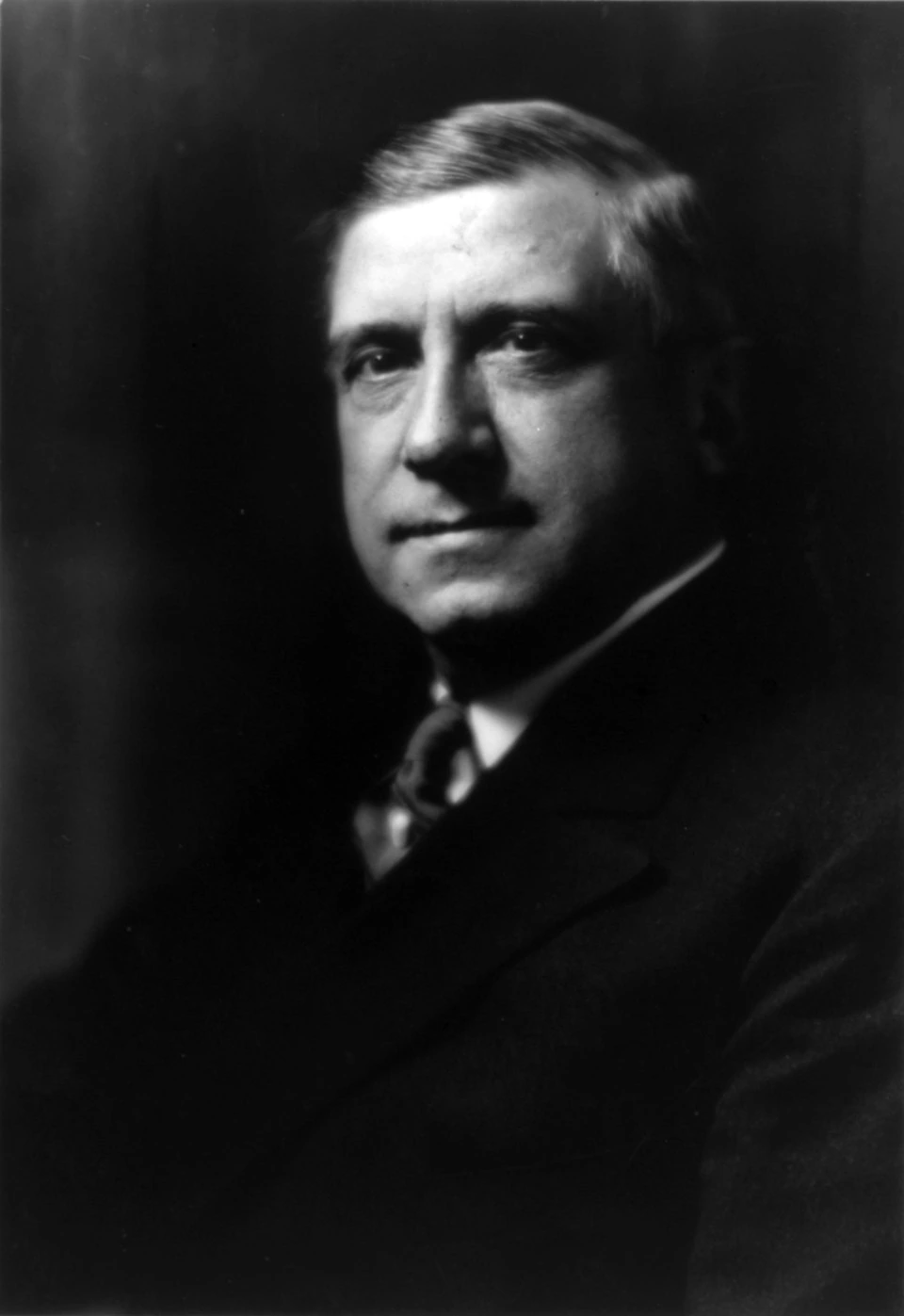
Charles R. Schwab, the founder and Chairman of The Charles Schwab Corporation, has a net worth estimated at approximately $17.6 billion as of early March 2026, according to Bloomberg's Billionaires Index. Forbes also maintains a real-time estimate on its billionaires profile page, last updated March 10, 2026. Both figures fluctuate daily with Schwab Corp stock prices, so any number you see is a snapshot, not a fixed fact. Here is what those numbers mean, where they come from, and how to make sense of them.
Charles Schwab Net Worth: Estimates, Liquid vs Total

Marcus Rothwell
27 Mar 2026
Which Charles Schwab are we talking about?
If you searched for "Charles Schwab net worth," there is a very good chance you want the man behind the brokerage: Charles Robert Schwab, born 1937, founder of The Charles Schwab Corporation and its current Co-Chairman. He is occasionally referenced in filings and profiles as "Charles R. Schwab" or simply "Chuck Schwab," and some searches append "Jr" out of habit, though he is not a junior. He is the definitive Charles Schwab of record.
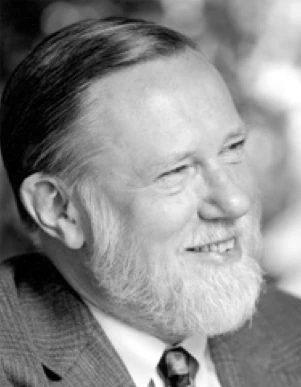
There is no widely known billionaire or prominent public figure named "Charles M. Schwab" competing for this search today. (There was a different Charles M. Schwab, the early 20th-century steel magnate, but that is a historical figure unrelated to the brokerage.) If you were looking for a different Charles, this article covers the brokerage founder. For other notable namesakes in wealth and industry, you might find it interesting to compare with Charles Geschke's net worth, the Adobe co-founder who built his fortune through a similarly founder-driven path in tech.
The current net worth estimate, range, and how it's calculated

Bloomberg put Charles Schwab's net worth at $17.6 billion as of its most recent update before this article was written. Forbes maintains its own figure on a real-time basis, with the profile timestamped March 10, 2026. The two trackers use slightly different methodologies, which is why they sometimes diverge by a few hundred million dollars. Neither number should be read as exact. Think of it as a range: somewhere in the $17 billion to $20 billion neighborhood, depending on the day's stock movement and any recently disclosed ownership changes.
Both Bloomberg and Forbes root their calculations in the same raw material: shares of The Charles Schwab Corporation (ticker: SCHW) that Charles Schwab beneficially owns. Bloomberg describes its index as using "the most transparent calculations available" and updates every business day after market close in New York. The key complexity is that Schwab does not simply hold shares outright in a personal brokerage account. According to Bloomberg's profile notes, he owns his stake "through trusts, partnerships and his spouse." SEC Form 4 filings confirm this: shares are held indirectly via trusts, a limited partnership, and spouse-as-trustee arrangements. Those indirect holdings are counted in his beneficial ownership total, which is what both trackers use as their starting point.
Schwab's 2025 Proxy Statement (DEF 14A) is the most direct public document for verifying this. It includes a beneficial ownership table for holders of 5% or more of common stock, with columns showing shares held directly, indirectly, the right to acquire within 60 days, and the resulting percentage of outstanding shares. If you want to do a back-of-envelope check, take the total beneficial shares listed, multiply by the current SCHW share price, and add any separately disclosed assets. That gives you a rough floor on his equity-based wealth.
Total net worth vs. liquid net worth: why they're very different numbers
When Bloomberg reports $17.6 billion, that is a total net worth figure, not liquid net worth. The distinction matters a lot for someone in Schwab's position. The vast majority of his wealth is tied up in SCHW shares held inside trusts and partnerships. Those shares cannot be converted to cash instantly without moving the market, triggering large tax events, or violating insider trading rules and blackout periods. In practical terms, his liquid net worth, meaning cash and near-cash assets he could access quickly without major consequence, is a small fraction of that headline number.
This gap between total and liquid net worth is not unique to Schwab. Most founder-billionaires are "rich on paper" in exactly this way. If SCHW stock drops 20%, his total net worth drops by roughly $3.5 billion on paper, but his lifestyle and actual cash flow are not necessarily impacted by that same amount in the short term. Conversely, liquid net worth is what creditors, estate planners, and some financial planning tools actually focus on because it reflects what can be deployed or accessed without a complex transaction. No public source breaks out Schwab's liquid net worth specifically, so that figure remains an estimate within an estimate.
Company net worth vs. personal net worth: two very different things

A common source of confusion in searches for "Charles Schwab corporation net worth" or "Charles Schwab bank net worth" is mixing up the company's financials with the founder's personal wealth. These are entirely separate concepts.
The Charles Schwab Corporation is a publicly traded financial services company with total assets in the hundreds of billions of dollars on its balance sheet (it operates Schwab Bank, a federally chartered bank). The company's "net worth" in accounting terms would be its shareholders' equity, which is the total assets minus total liabilities as reported on its balance sheet. That number runs in the tens of billions of dollars at the corporate level. But that is not Charles Schwab's personal net worth. He owns a percentage of the company. His personal net worth is his proportional slice of that equity, plus any other personal assets he holds.
To keep it clean: the corporation's balance sheet equity belongs to all shareholders. Charles Schwab's personal net worth reflects only his beneficial ownership stake, valued at current market prices. A search for "Charles Schwab bank net worth" or "Charles Schwab corporation net worth" is technically asking about the company, while "Charles Schwab personal net worth" or "Charles Schwab founder net worth" is asking about the man.
Where the Forbes and Bloomberg numbers come from, and how to verify them
Forbes and Bloomberg are the two most credible public sources for billionaire net worth tracking. Both have their own methodologies but share the same primary inputs for equity-based wealth: SEC filings, proxy statements, Form 4 insider transaction reports, and current market prices.
- Forbes Real-Time Billionaires: updates continuously during market hours based on SCHW stock price movements applied to known beneficial ownership. The March 10, 2026 timestamp on Schwab's profile reflects the last editorial review or methodology note, not necessarily the last price update.
- Bloomberg Billionaires Index: updates every business day after market close. Methodology notes on Schwab's profile specifically call out the trust and partnership structure, which means Bloomberg has reviewed Form 4 filings and proxy disclosures to build their ownership model.
- SEC EDGAR: the primary source both trackers draw from. You can search for Charles Schwab's Form 4 filings and the DEF 14A proxy directly on EDGAR at no cost. The proxy's beneficial ownership table is your most reliable verification tool.
- Schwab's annual 10-K: Schwab's SEC Form 10-K filings include a section on beneficial owners of more than 5% of common stock, cross-referencing the proxy data.
If you want to sanity-check any published figure, pull the latest proxy, find Charles Schwab's beneficial ownership row, multiply shares by today's SCHW closing price, and compare to what Forbes or Bloomberg shows. You will typically land within a few percentage points, with differences explained by any non-equity assets the trackers include (real estate, private investments, and so on, which are estimated since they are not publicly disclosed).
How Charles Schwab built this wealth

Charles Schwab founded the discount brokerage that bears his name in 1971, pioneering the idea that everyday investors should have access to stock trades without paying the high commissions that full-service brokerages charged. That single insight, combined with the deregulation of brokerage commissions in 1975, was the inflection point. The company went public, grew through the internet trading boom of the 1990s, survived the dot-com crash, and eventually became one of the largest financial services companies in the United States.
Schwab served as CEO for most of the company's formative decades and has remained Chairman or Co-Chairman since inception. He has held his large equity stake throughout, meaning his wealth has compounded in line with the company's growth over more than 50 years. The 2020 acquisition of TD Ameritrade was a transformative moment that significantly expanded the company's scale and, by extension, increased the value of his remaining stake. By comparison, Charles Schulz's net worth is another example of how a founder's long-term ownership in their own creation can generate generational wealth, even in very different industries.
What "high net worth" means in Schwab's client world
Here is where the article needs to separate two very different things that both use the phrase "high net worth" in a Schwab context. One is about Charles Schwab the person. The other is about the thresholds Schwab the company uses to categorize its clients. They are unrelated numbers.
For Schwab clients, the company uses total household assets held at Schwab (not overall net worth) as the threshold for premium service tiers. According to Schwab's SEC filings, press releases, and 10-K disclosures, the tiers work like this:
| Tier | Asset Threshold at Schwab | Program Name |
|---|---|---|
| Standard | Below $1 million | Standard retail services |
| High Net Worth | $1 million to $10 million | Schwab Private Client Services |
| Ultra High Net Worth | $10 million or more | Schwab Private Wealth Services |
| Alternative Investments Access | $5 million or more | Schwab Alternative Investments Select |
Clients with $1 million or more in qualifying household assets (which must include a retail account) are automatically enrolled in Schwab Private Client Services and remain enrolled for a minimum of 12 months. Once total eligible Schwab assets reach $10 million, clients move up to Schwab Private Wealth Services. The $5 million threshold applies specifically to access to Schwab Alternative Investments Select, which opens private market investment access to eligible retail clients. To access Schwab Alternative Investments Select at Schwab, Charles Schwab states eligibility requires at least $5M in household assets held at Schwab and being a Schwab client for at least 30 days The $5 million threshold applies specifically to access to Schwab Alternative Investments Select.
It is worth noting that these thresholds are based on assets at Schwab, not your total net worth. A client with $20 million in net worth but only $800,000 held at Schwab would not qualify for Private Client Services on those assets alone. The thresholds are about your relationship with Schwab specifically.
What high-net-worth clients actually get from Schwab
Schwab Private Client Services (the $1M to $10M tier) provides dedicated service teams, personalized investment guidance, and ongoing portfolio consultations. The focus is on building a more managed relationship than standard self-directed investing, though clients retain control of their accounts.
Schwab Private Wealth Services (the $10M and above tier) goes further. Schwab describes this as a "complimentary benefits" program for clients above that threshold. Benefits include access to specialized wealth advisors, enhanced financial planning resources, and credit products such as the Schwab Bank Pledged Asset Line, which allows clients to borrow against eligible securities held at Schwab. Clients at this tier also get more direct access to estate planning and tax coordination support.
The Alternative Investments Select program at the $5 million threshold specifically expands access to private markets, giving eligible clients the ability to invest in asset classes that are typically unavailable to standard retail investors, including private equity and private credit structures.
- $1M+ at Schwab: automatic enrollment in Schwab Private Client Services, dedicated service team, personalized investment guidance, minimum 12-month enrollment
- $5M+ at Schwab: eligible for Schwab Alternative Investments Select, access to private market investments
- $10M+ at Schwab: Schwab Private Wealth Services, enhanced planning resources, borrowing/credit products including the Pledged Asset Line, specialized wealth advisor access
A simple net worth worksheet to track and verify this yourself

Whether you are tracking Charles Schwab's estimated net worth over time or building your own, the structure of a reliable net worth worksheet is the same. Here is a practical framework you can use in a spreadsheet or notes app.
- List all assets by category: equity holdings (shares in public companies), real estate, private investments, cash and cash equivalents, and other tangible assets. For a public figure like Schwab, the equity column is the most important and is sourced from SEC filings.
- Note the source and date for each asset value: for SCHW shares, use EDGAR's most recent proxy or Form 4 plus today's closing stock price. Mark each row with a retrieval date so you know when data gets stale.
- Separate total assets from liquid assets: flag each asset as liquid (cash, publicly traded shares you can sell immediately), semi-liquid (real estate, large equity stakes with insider trading constraints), or illiquid (private investments, locked-up partnerships).
- Subtract liabilities: mortgages, loans, pledged asset lines, or other debt. For public figures, disclosed liabilities are minimal unless a credit product shows up in filings.
- Calculate total net worth (assets minus liabilities) and liquid net worth (liquid assets minus current obligations).
- Record your assumptions: what share price did you use? What date was the proxy from? Were any private asset values estimated? Note these clearly so you can revisit them.
- Set a review cadence: Bloomberg updates daily. Forbes updates in real time. For your own tracking, a monthly update on major assets and a quarterly full reconciliation is usually sufficient.
For tracking a public billionaire like Schwab, the worksheet simplifies considerably because the primary asset (SCHW equity) is public and re-priced daily. The main work is keeping the beneficial ownership share count current, which requires checking for new Form 4 filings whenever a sale, gift, or transfer is reported. The 2025 Proxy's beneficial ownership table is your reset point each proxy season, and Form 4 filings update the count between annual filings.
One pattern worth watching: when large ownership stakes shift between direct holding and trust or partnership structures, the total beneficial ownership count typically stays the same (since indirect holdings are included), but the form of ownership changes. Those transfers are not sales and do not reduce net worth; they are estate or tax planning moves. Distinguishing those from actual share sales is important when interpreting Form 4 activity. For context on how other prominent financial figures structure their wealth, the net worth profile of Charles de Gunzburg offers an interesting parallel in terms of family trust and investment vehicle structures.
The bottom line on Charles Schwab's net worth today
As of March 2026, the most reliable publicly available estimate for Charles R. Schwab's personal net worth is approximately $17.6 billion per Bloomberg, with Forbes maintaining a similar real-time figure updated as recently as March 10, 2026. That number is almost entirely driven by his beneficial ownership of SCHW shares held through trusts, limited partnerships, and spousal arrangements. It is a total net worth figure, not a liquid one. His actual liquid net worth is substantially lower and is not disclosed publicly. For another related example in wealth reporting style, see charl schwartzel net worth.
The Charles Schwab Corporation's own balance sheet equity is a separate, much larger number that reflects the company's total shareholder base, not just his stake. If you saw a number in the hundreds of billions attached to "Charles Schwab net worth," you were likely looking at the company's total assets, not the founder's personal wealth.
To verify the figure yourself: pull the latest DEF 14A proxy from SEC EDGAR, find the beneficial ownership table, multiply Schwab's total beneficial shares by the current SCHW closing price, and compare to Bloomberg or Forbes. Charles Schwab’s 2026 DEF 14A proxy statement filed with the SEC on EDGAR contains the beneficial ownership disclosure used for calculating his stake. You will get within a reasonable margin of the published estimate, and you will understand exactly what assumptions sit underneath it.
FAQ
Is Charles Schwab a billionaire “because of” his company’s net worth?
No. His personal net worth is driven by his beneficial ownership of Schwab Corp shares, not the corporation’s total shareholder equity or assets. The company’s accounting net worth is shared by all shareholders, while his personal figure is only his proportional stake plus any other personal assets.
Why do Bloomberg and Forbes sometimes differ, even if they both use SCHW shares?
They can apply different estimates for non-stock components (for example, real estate or private investments) and may use slightly different timing conventions for share counts and closing prices. Even small methodology differences can swing the total by hundreds of millions.
Does the estimate change if his shares are held through trusts or a limited partnership?
The trusts or partnership structures do not typically change the value being attributed to him if they count as beneficial ownership, but they can change how transfers are reported. You may see changes in reported form of ownership on SEC filings without an actual reduction in beneficially owned shares.
If I see a Form 4 showing a sale, is Schwab’s net worth automatically lower?
Not necessarily. A Form 4 can reflect a sale, but it can also reflect non-sale transactions like gifts, exercises, or transfers between accounts or entities. Only after confirming transaction codes and whether shares were actually sold does it indicate potential net worth reduction.
How can I avoid confusing Charles Schwab the person with Schwab Bank or Schwab Corp?
Use the wording. “Personal net worth” or “founder net worth” refers to the individual. “Company net worth” or “bank net worth” usually refers to accounting equity for the corporation or the bank subsidiary, which is a much larger and unrelated number.
Is the headline net worth figure the same as what he could withdraw as cash tomorrow?
No. The article’s distinction matters: most wealth is tied to company shares in trusts and partnerships. Converting that to cash quickly could trigger major tax consequences and requires careful execution, so liquid net worth is much smaller and not publicly broken out.
What’s the fastest way to sanity-check a published Charles Schwab net worth number?
Grab the latest beneficial ownership share count from the most recent proxy table for his row, multiply by the current SCHW closing price, and then see how the published figure accounts for any additional estimated assets. If the published number is far outside that ballpark, it likely includes significant non-equity assumptions.
What if “net worth” calculators online show a wildly different number than Bloomberg or Forbes?
Often they are using outdated share counts, not the beneficial ownership table, or they apply generic assumptions for privately held assets. The biggest red flag is a calculator that does not explain whether it is valuing beneficially owned SCHW shares and what share price timing it uses.
Does the net worth estimate update on weekends and holidays?
Usually not in a meaningful way. Even if a page updates daily, the underlying equity valuation depends on market trading. Changes in share price after the last market close drive most of the day-to-day movement.
How should I interpret “share count” changes when he transfers holdings between vehicles?
Treat those changes as potentially non-economic. When shares move between direct and trust or partnership structures while remaining beneficially owned, the total beneficial share count often stays similar. Look for genuine sale indications rather than assuming every Form 4 implies reduced wealth.
Are the client wealth tiers at Schwab related to Charles Schwab’s personal net worth?
No. Schwab’s service tiers are thresholds based on customer assets held at Schwab, not on the founder’s net worth. High or low billionaire-style wealth and client eligibility numbers are separate systems.
Next Article
Charles Geschke Net Worth: Range, Drivers, and How to Verify
Find Charles Geschke net worth range, what drives estimates, and a checklist to verify current, credible figures.