
Charles Frederick Worth's net worth at the time of his death in 1895 is most credibly estimated in the range of £500,000 to £1,000,000 in contemporary Victorian-era pounds sterling, which translates very roughly to $60 million to $120 million in today's money depending on which inflation methodology you use. Charles Frederick Worth’s life dates are commonly given as 13 October 1825 to 10 March 1895, and he is identified as the English-born founder of the House of Worth. That's a wide range, and it's intentional: the historical record is incomplete, currency conversion across 130-plus years is genuinely messy, and no single verified probate figure has been widely published in accessible secondary sources. What we do know is that Worth ran the most commercially dominant fashion house in the Western world for decades, employed nearly 1,200 workers by 1870, and dressed European royalty and American industrial wealth. He was not merely a celebrated artist. He was a serious businessman who built a highly profitable enterprise, and his personal wealth almost certainly reflected that.
Charles Frederick Worth Net Worth: Likely Wealth Explained

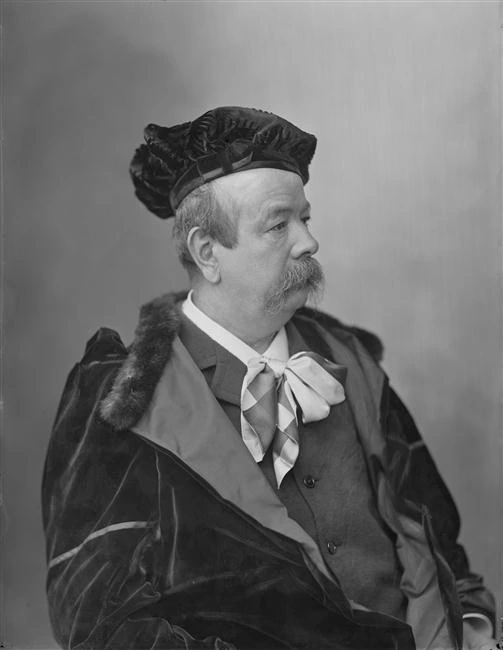
Who Charles Frederick Worth was and why people are searching his net worth

Born on October 13, 1825 in Bourne, Lincolnshire, England, Worth moved to Paris in his twenties and in 1858 co-founded the House of Worth at 7 Rue de la Paix with Swedish-born businessman Otto Bobergh. That partnership gave Worth design creativity and Bobergh financial backing, a combination that launched what many historians consider the first true haute couture house. Worth died on March 10, 1895, having built a fashion empire that the 1911 Encyclopaedia Britannica explicitly called the most prominent dressmaking establishment of its era.
People search his net worth for a few reasons. If you're specifically looking for Charles Wellesley net worth figures, you can apply the same approach to separating marketing estimates from verifiable financial signals Worth's net worth. Some are fashion history enthusiasts curious about how wealthy a 19th-century couturier could actually become. Others are researchers comparing wealth accumulation patterns across industries and eras. And a fair number are just surprised to discover that a dressmaker from Victorian England became one of the most commercially powerful figures in European fashion, and they want to understand the financial scale of that achievement. It's a legitimate question, even if the answer requires a bit of historical detective work.
The net worth estimate: ranges and how to read them
There is no single confirmed, publicly verified probate valuation for Worth's estate that has been widely cited in accessible English-language secondary sources as of mid-2026. What exists instead is a combination of contextual evidence: the scale of his business, his clientele, his property holdings, his lifestyle, and the general wealth profiles of comparably successful Victorian-era entrepreneurs. From that evidence, a reasonable estimated range for his net worth at peak (late 1880s to 1895) runs from roughly £500,000 to £1,000,000 in 1890s pounds sterling.
| Conversion Method | Approximate 2026 Equivalent | Notes |
|---|---|---|
| Retail Price Index (RPI) inflation | $55M – $110M USD | Measures purchasing power of consumer goods; tends to produce lower figures |
| Average Earnings multiplier | $120M – $250M USD | Compares wages then vs. now; reflects social weight of wealth more accurately |
| Economic status / prestige index | $200M – $400M USD | Measures relative standing among contemporaries; highest and most debated figure |
| Midpoint blended estimate | $80M – $150M USD | Practical working range for casual research purposes |
The most practically useful figure for casual readers is that midpoint blended range of roughly $80 million to $150 million in today's money. That's not a precise answer, but it's honest. Anyone presenting a single exact number for a 19th-century historical figure's wealth is almost certainly overstating their confidence in the data. Use ranges, understand the methodology behind them, and treat them as directional rather than definitive.
How Worth actually built his wealth

The House of Worth's business model was genuinely novel for its time and that novelty drove serious revenue. Before Worth, dressmakers were largely anonymous craftspeople who executed clients' visions. Worth flipped that model entirely: he was the creative authority, clients came to him, and they paid a premium for the privilege. That shift in power dynamics had direct financial consequences.
The couture house as a high-margin enterprise
By 1870, after partner Bobergh retired following the Franco-German War, Worth was operating what was described by contemporaries as the most renowned dressmaking establishment in the Western world, with nearly 1,200 employees. That workforce scale is a critical data point. A business with 1,200 workers in 1870 Paris was not a boutique operation. It was an industrial-scale luxury enterprise generating substantial annual revenue, and Worth as sole owner after Bobergh's departure captured the full profit stream.
Royal and aristocratic clientele as a pricing signal
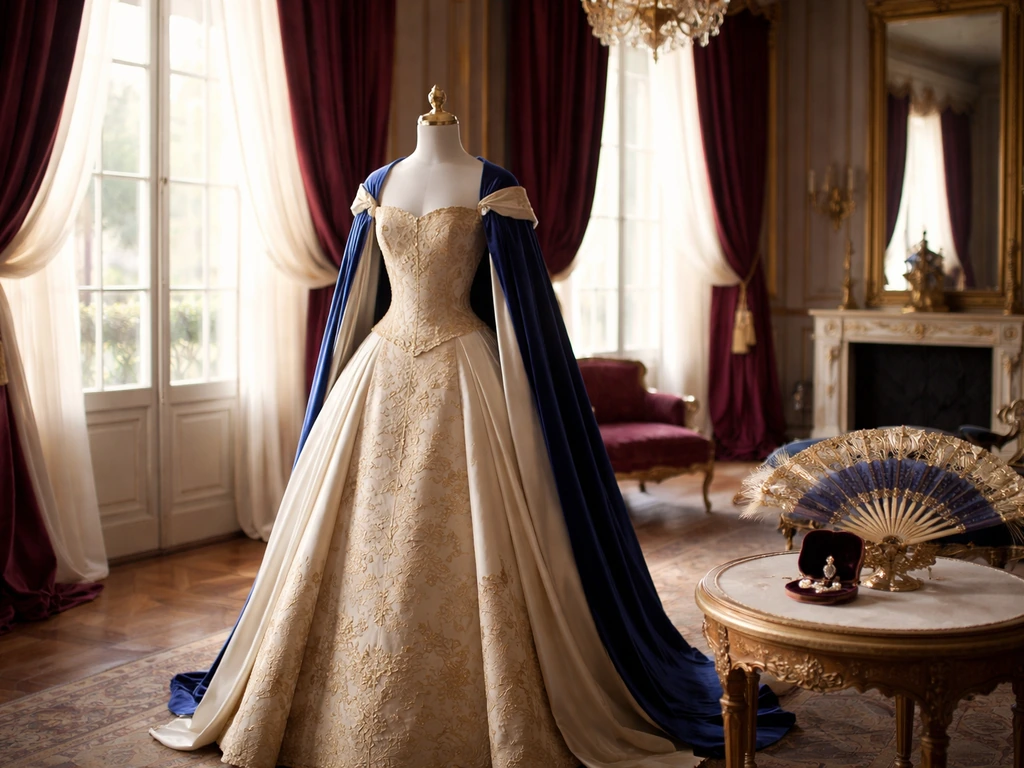
Worth's client roster included Empress Eugénie of France, Queen Victoria, and a roster of European and American aristocratic families. These were not price-sensitive buyers. Worth charged accordingly, and his reputation for dressing European royalty functioned as marketing that attracted wealthy American industrialists' wives during the Gilded Age. That transatlantic clientele expansion in the 1870s and 1880s almost certainly represented a significant revenue acceleration for the house.
Business ownership and succession structure
Worth structured his business for continuity. His sons Jean-Philippe and Gaston were integrated into the house's leadership, with Gaston handling the commercial side and Jean-Philippe the design side. This wasn't just a family arrangement; it was an asset-preservation strategy. The House of Worth continued operating well into the 20th century, which means the business itself retained going-concern value beyond Worth's death. His estate likely included not just cash and property but a functioning business with substantial brand equity.
Financial milestones, assets, and spending signals

Direct asset documentation for Worth is limited in what's accessible to general researchers, but several known facts serve as useful financial signals. Worth maintained a villa at Suresnes outside Paris, which was a marker of significant wealth among successful Parisian businesspeople of that era. He also maintained a working atelier at one of Paris's most prestigious commercial addresses, 7 Rue de la Paix, for decades. Long-term tenancy at that address alone implied substantial ongoing financial capacity.
The 1870 employment figure of 1,200 workers is perhaps the most concrete asset signal available. If you apply even conservative 19th-century French luxury industry wage and revenue-per-employee estimates, that workforce would imply annual revenues in the hundreds of thousands of francs at minimum, and likely well into the millions at peak. Worth's personal wealth would have accumulated from decades of profit extraction from that enterprise, compounded over a 35-plus year career.
On the spending side, Worth was known for living well: personal collections of fine art, a distinguished social life in Paris, and the kind of property ownership consistent with upper-bourgeois to aristocratic-adjacent status in Second Empire and Third Republic France. These are soft signals, but they're consistent with the upper end of the estimated wealth range rather than the lower end.
Where the wealth numbers come from and what's actually verified
This is the part of the research process where intellectual honesty matters most. Most net worth figures you'll find attributed to historical figures like Worth are derived from a combination of primary and secondary sources, not from a single verified document. Here's what the sourcing landscape looks like for Worth specifically.
- Encyclopaedia Britannica (1911 edition): Confirms biographical facts, employment scale, and business prominence but does not provide financial figures
- The Metropolitan Museum of Art records and exhibitions: Documents the House of Worth's historical significance and garment archive but focuses on art history rather than financial history
- ASU FIDM Museum: Confirms the 1,200-employee figure by 1870 and the house's commercial dominance, which serves as an indirect wealth signal
- Encyclopedia.com entries derived from reference works: Provide succession and structural business information useful for asset valuation inference
- TRC Leiden archives: Document the 1858 founding and Bobergh's financial backing, relevant to understanding ownership structure at inception
- Fashion history biographies: Several book-length treatments of Worth exist and some include period accounts of his lifestyle and wealth, though few publish specific estate figures
What is verified: Worth's career dates, the House of Worth's founding and address, the 1,200-employee figure, his royal clientele, his sons' succession, and the broad commercial dominance of his house. What is inferred: specific revenue figures, personal estate value, and any precise net worth number. The estimates floating around online are largely back-calculated from the verified operational facts, not drawn from a primary financial document. That doesn't make them wrong. It makes them estimates, which is exactly what they should be called.
How Worth compares to other wealthy figures of his era and context
To put Worth's wealth in perspective, consider that successful Parisian luxury merchants and manufacturers of the Second Empire period could accumulate fortunes in the range of several hundred thousand to several million francs over a full career. Worth's operation was larger and more profitable than most comparable luxury businesses of his era, which pushes his personal wealth estimate toward the upper tier of that professional class, though still well below the truly dynastic industrial fortunes of a Vanderbilt or Rothschild.
Among figures whose wealth is tracked on sites like this one, the comparison that comes most naturally is to other industrialists and commercial empire-builders of the Victorian period rather than to purely hereditary wealth. Worth built from nothing (he arrived in Paris as a young English shopworker with limited capital) and accumulated his fortune entirely through commercial success, which makes him more comparable to self-made industrial-era entrepreneurs than to landed aristocracy. On that peer group basis, his estimated wealth looks substantial and well-earned rather than extraordinary by the standards of Gilded Age commerce.
For readers exploring this site's other profiles, the comparison dynamic is genuinely different for contemporaries like Charles Wellesley or figures tied to institutional wealth and hereditary title. If you're also looking for Charles Woodburn's net worth, it helps to compare how each figure’s business context and sourcing methods shape the final range. Worth's wealth was entirely commercial and built within a single generation, which is part of what makes him interesting as a case study in 19th-century entrepreneurial wealth accumulation.
How to research updates and resolve conflicting claims
If you've seen a specific net worth figure for Worth cited somewhere and want to verify or challenge it, here's how to approach that practically.
- Search French national archives (Archives nationales) for probate or estate records filed in Paris around 1895. French succession records from that period are partially digitized and may include estate valuations for prominent residents.
- Check the British National Archives for any English probate records, since Worth retained British nationality throughout his life and some estate matters may have been processed through English courts.
- Look for auction records tied to the House of Worth, particularly any estate sales conducted after 1895 or after the house eventually closed in the mid-20th century. Auction house archives (Christie's, Sotheby's) sometimes contain provenance documents that reference original ownership value.
- Search Google Scholar or JSTOR for academic fashion history articles using terms like 'House of Worth revenue,' 'Worth finances,' or 'Worth estate 1895.' Academic fashion historians have done primary source work that doesn't always surface in general web searches.
- Cross-reference any cited figure against the conversion methodology being used. If a source says Worth was worth '$X million in today's money,' ask which inflation index they used. RPI, average earnings, and GDP-per-capita multipliers can produce results that differ by a factor of three or more.
- Treat any figure presented without sourcing methodology as a rough estimate at best. Reputable historical finance sources will always disclose their conversion basis.
- Check the Oxford Dictionary of National Biography entry for Worth, which provides peer-reviewed biographical scholarship and may reference financial details not in freely accessible sources.
The honest bottom line on conflicting claims: most disagreements about Worth's net worth come down to different inflation methodologies rather than genuine disputes about the underlying Victorian-era wealth figure. This is why you will often see modern discussions of Charles Kirby-Welch net worth presented with similar caveats and methodology differences. If two sources agree that Worth's estate was in the range of several hundred thousand pounds sterling but disagree about the modern equivalent, that's a methodology debate rather than a factual dispute. Understand which conversion approach each source uses and you'll find most of the apparent conflicts resolve into a coherent, if wide, range.
FAQ
Why do different websites give very different “Charles Frederick Worth net worth” numbers?
Most published differences come from conversion method choices (chain vs. average inflation, wage-index vs. consumer-price approaches) and from whether they estimate from business scale or from estate-probate assumptions. A single “exact” modern-dollar figure is usually masking uncertainty rather than removing it.
Is there any verified probate valuation for Worth’s estate?
For general English-language reference use, there is no widely published, single probate number that researchers can treat as fully verified and directly comparable. The most credible ranges are built from operational signals (workforce size, address stability, clientele) rather than a solitary, easily cited estate document.
How should I interpret the range of £500,000 to £1,000,000?
Treat it as a directional estimate anchored to late-career conditions (late 1880s through 1895), not as a strict “net worth at death” audit. If you compare it across sources, check whether each author is mapping to the same time window, because peak-period assumptions change the midpoint.
Does the net worth estimate include the value of the House of Worth after Worth’s death?
It may include business-going-concern value only indirectly, because the House continued with his sons’ leadership. However, most online “net worth” claims do not clearly separate personal liquid assets from the ongoing business value, so two figures can look different even if they are based on similar underlying economics.
What assets likely made up most of Worth’s wealth (cash, property, business)?
Given the era and what is documented, the largest components were likely (1) equity in the operating fashion enterprise and its brand value, (2) real estate or long-term property interests tied to his Paris presence and villa, and (3) personal holdings like art and collections. Cash-only estate valuations would usually understate real wealth for someone with a business-centered portfolio.
Could Worth’s wealth have been lower than the upper end because of business costs?
Yes, if overhead and production costs were higher than assumed. Large luxury houses employed substantial staffs and required ongoing material spend, so an estimate that converts workforce size to profit margins without sensitivity analysis can overstate personal take-home wealth.
Why does the article compare him to industrialists instead of hereditary aristocrats?
Because the wealth-building path in his case was primarily commercial, starting from a non-elite background and scaling a sales-driven enterprise. If you instead compare him to landed fortunes, you can get mismatched expectations for how wealth was accumulated and what “net worth” should include (for example, tenant rents and inherited capital).
If I want to verify a specific net worth figure I saw online, what’s the fastest way to check?
Find what base-year value the author starts from (Victorian pounds, francs, or another local measure), then identify the inflation or conversion approach used. If you cannot locate the starting point and the conversion method, treat the modern number as non-verifiable and rely on ranges from operational evidence.
What’s the difference between “net worth,” “wealth,” and “income” in historical discussions like this?
Net worth is an asset minus liabilities snapshot concept, wealth is broader and often less precisely defined, and income is a flow per year. Many online claims mix them, for example estimating income and then back-calculating “fortune,” which can produce a number that feels specific but is actually a multi-step inference.
Does Worth’s famous clientele (royalty) directly translate into higher net worth?
It supports higher pricing power and marketing reach, but it does not automatically mean proportional personal wealth in any single year. Wealth depends on margins, costs, succession planning, and reinvestment, so clientele is a strong signal for business profitability rather than a direct accounting line item.
Are there any common mistakes people make when searching “Charles Frederick Worth net worth”?
Two common issues are using an overly narrow source without checking its conversion assumptions, and confusing Worth with similarly named figures. Also watch for claims that present one number without explaining whether it is based on estate assumptions, business scaling, or a specific primary document.
Charles Kirby-Welch Net Worth: Verified Facts and Estimates
Charles Kirby-Welch net worth explained with verifiable sources, estimate method, likely assets, liabilities, and range.