
Forbes estimates King Charles III's personal net worth at least $500 million in private assets, with another $46 billion held in trust as sovereign. Those are two very different pots of money, and conflating them is where most of the confusion around this search starts. If you see a single headline number for Charles net worth, double-check whether it is based on personal assets only or also includes trust-held assets and related sovereign role figures.
King Charles Net Worth Forbes Estimate: What It Means

Marcus Rothwell
4 Jul 2026
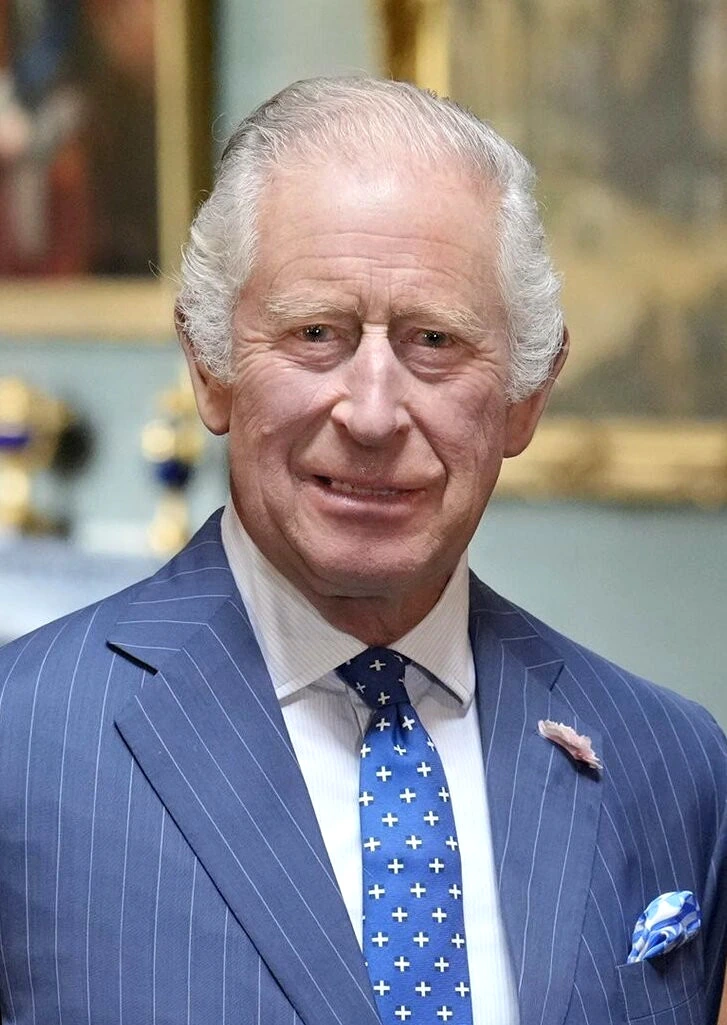
Which King Charles are we talking about?

When people search "King Charles net worth Forbes," they almost always mean King Charles III, the British monarch who ascended to the throne in September 2022 following the death of Queen Elizabeth II. He was born Charles Philip Arthur George in 1948, served as Prince of Wales for over 70 years, and is now the reigning sovereign of the United Kingdom and 14 other Commonwealth realms.
He is not to be confused with other notable Charleses you might encounter on a wealth-research site, such as Charles D. For example, when people look up Charles D. King net worth, they are usually talking about a different person entirely, not the British monarch. King (the entertainment executive), Charles the French (the French rapper), or other public figures named Charles.
The royal connection, the Forbes coverage, and the enormous numbers tied to trust-held Crown assets make King Charles III unmistakably the subject here.
What Forbes actually says about King Charles's wealth
Forbes published a detailed breakdown under the headline "How Rich Is King Charles III? Inside The New Monarch's Outrageous Fortune" (by Giacomo Tognini and Carlie Porterfield). The key figures from that coverage are clear and worth quoting directly: Forbes valued Charles at "at least $500 million in personal assets" and separately noted "another $46 billion held in trust as the sovereign.
" A companion Forbes piece framed his real-estate holdings specifically, describing a roughly $25 billion real estate empire across properties including Buckingham Palace and other royal estates. A Forbes video segment also stated that Charles "inherited $500 million from Queen Elizabeth" personally and that he oversees or controls around $42 billion in assets in his role as King.
The slight variation between $46 billion and $42 billion across Forbes pieces reflects different snapshots and valuations of the same trust-held assets, not a fundamental disagreement.
So when you see a headline saying Forbes puts King Charles's net worth at over $500 million, that is accurate for his personal holdings. For example, the concept of Charles's net worth can refer to personal assets only, or it can include trust-held and sovereign-role holdings depending on the methodology King Charles's net worth. When a headline says he is worth tens of billions, those figures fold in the sovereign trust assets he oversees but does not personally own. Both figures come from Forbes reporting, but they describe completely different things.
Breaking down where the numbers come from

To understand what Forbes is actually counting, you need to know how royal finances are structured. The official Royal Family website (royal.uk) separates the monarch's finances into three distinct streams, which is the cleanest framework available.
- The Sovereign Grant: This is public funding for the official duties of the Royal Household. It is calculated as a percentage of The Crown Estate's net revenue profit from two years prior. The Crown Estate generated a net revenue profit of £1.1 billion for 2023-24, and the grant mechanism uses a set percentage (adjusted from 25% to 12% in recent reviews) as a benchmarking tool. This money pays for staff, maintenance of official residences, and state functions. It is not personal income.
- The Privy Purse: This is primarily income from the Duchy of Lancaster, a portfolio of land and commercial assets held in trust for the Sovereign. The Duchy's income funds the King's private and official expenses not covered by the Sovereign Grant. Importantly, GOV.UK guidance confirms that Privy Purse income, including from the Duchy of Lancaster, is taxable to the extent it is not used for official purposes.
- Personal wealth and income: This is what Forbes is tracking when it says $500 million. It covers Charles's private investment portfolio, private estates (such as Highgrove, which he bought personally), and assets he inherited directly. Queen Elizabeth II left him a private estate that Forbes estimates at around $500 million.
The $46 billion (or $42 billion in some Forbes estimates) represents assets that Charles holds or oversees in his role as sovereign, not cash or property he could personally sell or transfer. These include things like the Crown Jewels, much of the royal art collection, and other assets placed in trust for future monarchs and the nation. They are constitutionally and legally not his personal property in any meaningful financial sense.
The Crown Estate is not his money (and that matters a lot)
One of the most common mistakes in reporting on royal wealth is treating The Crown Estate as though it belongs to the King. It does not. The Crown Estate is an independent commercial business managed by its own board of commissioners. [Its profits go directly to HM Treasury for UK taxpayers, not to the monarch.
](https://www. thecrownestate. co. uk/news/the-crown-estate-delivers-1-1-billion-net-revenue-profit-for-the-UK) [HM Treasury guidance is explicit: "The Crown Estate does not pay the Sovereign Grant to the Monarch directly.
](https://www. gov. uk/government/publications/sovereign-grant-act-2011-guidance/sovereign-grant-act-2011-guidance? os=vbkn42)" The Guardian's explainer reinforces this: the monarch cannot freely dispose of Crown Estate assets, and the revenues from the estate do not belong to the King personally.
When a wealth site includes Crown Estate value in a King Charles net worth figure, that is a significant methodological overreach.
Why Forbes and other sites give you different numbers

This is where it gets genuinely messy, and understanding why helps you evaluate any figure you find.
| Source | Headline Figure | What It Includes | Key Caveat |
|---|---|---|---|
| Forbes (personal) | $500 million+ | Inherited private assets, personal investments, private estates | Describes personal holdings only; excludes trust/sovereign assets |
| Forbes (full picture) | $46 billion in trust + $500M personal | Personal assets plus sovereign-role trust assets | Trust assets are not personally owned or freely disposable |
| CelebrityNetWorth (style) | Higher consolidated figures | Often blends personal + Duchy + broader royal assets | Methodology blurs personal ownership vs. role-based control |
| South China Morning Post | $2.3 billion | Repackages Forbes component estimates into a single net worth | Not Forbes' own single-number figure; aggregated by a third party |
| Royal.uk (official) | No single net worth figure | Three separate income/wealth streams explained structurally | Most accurate framework but requires synthesis to estimate total |
The core issue is methodology: Forbes breaks Charles's wealth into components and is transparent about which pile is personal versus trust-held. Many commercial wealth sites then repackage those components into a single headline number, sometimes adding in Duchy income at a multiplied valuation, sometimes including Crown Estate assets, and often without distinguishing between what Charles personally owns and what he administers as King. Time magazine flagged this directly, noting that the overall calculation is "opaque and contested" and that much of the relevant wealth structure is private or trust-based rather than a straightforward balance-sheet number.
How to read and verify these figures today
Net worth figures for royals age fast and travel far from their original context. If you are specifically trying to estimate Henri Charrière net worth, it helps to separate sensational jailhouse narratives from documented earnings and verified assets. Here is a practical checklist for evaluating any number you encounter.
- Check the date: Forbes' detailed breakdown was published around the time of Charles's accession in 2022. Property valuations, investment portfolios, and the pound-to-dollar exchange rate have all shifted since then. A figure from 2022 may be significantly off today.
- Trace it to the original Forbes article: Many sites cite 'Forbes' without linking to a specific piece. Search Forbes directly for 'King Charles III net worth' and look for the Tognini/Porterfield byline. If a site just says 'Forbes says X' without a link or date, treat it skeptically.
- Separate personal from sovereign assets: Ask whether the figure includes trust-held assets. If a site says Charles is worth $20+ billion without explaining what that includes, it is almost certainly mixing personal wealth with sovereign-role assets.
- Check the official royal finance disclosures: Royal.uk publishes a Royal Finances paper (the most recent was dated June 2026) explaining current income streams and asset structures. The GOV.UK Sovereign Grant Act guidance and the Royal Trustees' report on the Sovereign Grant Review are also publicly available and give you the actual financial mechanics behind the numbers.
- Cross-reference with NAO and HM Treasury: The National Audit Office reviews the Royal Household's use of public funding. These audits are publicly available and give you a verified picture of what the Sovereign Grant covers, which helps you back out what must be personal wealth versus public funding.
- Look for a currency and exchange note: Most Forbes figures are quoted in USD. The underlying assets are largely GBP-denominated, so headline dollar figures shift with the exchange rate even when the underlying assets do not change in value.
Myths and misconceptions worth clearing up
A few things come up repeatedly in discussions of King Charles's wealth that are either wrong or misleading.
- Myth: King Charles is one of the richest people in the world. This is only true if you include all sovereign trust assets as personal wealth, which is not how Forbes or reputable financial analysis treats them. On a personal-assets-only basis, $500 million is significant but nowhere near the Forbes Billionaires list threshold.
- Myth: The Crown Estate makes him a multi-billionaire. The Crown Estate's £1.1 billion annual profit goes to UK taxpayers via HM Treasury, not to Charles. He has no personal claim on it.
- Myth: He inherited most of the late Queen's multi-billion-dollar estate. Queen Elizabeth II's personal estate was estimated at around $500 million. The vast majority of what is popularly described as her 'wealth' consisted of the same sovereign trust structures and Crown assets that Charles now oversees, not private inheritable property.
- Myth: All royal residences belong to the King personally. Properties like Buckingham Palace and Windsor Castle are held by the Crown in trust, not personally owned by Charles. Sandringham and Balmoral are private royal estates that were inherited personally and do count toward private net worth.
- Myth: His net worth is a fixed, audited number. It is not. It is an estimate assembled from property valuations, investment disclosures, and structural analysis. No audit produces a single certified 'King Charles net worth' figure.
Where to go next for the most current numbers
If you want the most defensible, up-to-date picture of King Charles III's wealth today, here is the practical search path: start at royal. uk and read the Royal Finances section and the most recent Royal Finances Paper (June 2026 edition). Then check the GOV. UK page for the Sovereign Grant Act 2011 guidance and the most recent Royal Trustees' report on the Sovereign Grant Review.
These give you the structural framework. From there, go directly to Forbes. com and search for the Tognini/Porterfield piece to get their personal-assets estimate, and note the publication date so you can apply any necessary adjustment for time elapsed and currency movement. Finally, check The Crown Estate's own annual report for current net revenue profit figures, which feed directly into the Sovereign Grant calculation and are useful context for separating Crown wealth from personal wealth.
If you want to compare this kind of wealth research to how other notable Charleses accumulate and report their net worth, it is worth noting that figures for people like Charles D. King or other entertainment and business figures named Charles involve entirely different structures: personal equity stakes, salaries, deal proceeds, and publicly verifiable business valuations. Royal wealth is uniquely complicated by constitutional trust structures, sovereign role assets, and deliberate opacity that most celebrity net worth research simply does not encounter. Understanding that distinction makes you a much sharper reader of any wealth estimate you find, whether it is for a king or anyone else.
FAQ
Why do different sites show King Charles’s net worth as either “over $500 million” or “tens of billions”?
They are usually counting different categories. The smaller figure is limited to his personal assets, while the larger numbers often bundle trust-held sovereign assets he oversees as king. If the headline does not clearly label personal versus trust-held components, treat it as a combined estimate, not his transferable personal wealth.
Does King Charles personally own the Crown Jewels or the royal art collection?
In practical financial terms, those assets are held in ways that are not the same as personal ownership. They function as national or trust-held assets administered for the monarchy’s role, so you should not assume they are freely sellable or that their market value is comparable to personal equity on a balance sheet.
How should I interpret “Sovereign Grant” when reading net worth articles?
Think of the Sovereign Grant as a funding mechanism for the monarch’s official duties, not a direct indicator of his personal net worth. Confusing grant revenues (or their calculation drivers) with personal assets is a common reason net worth numbers get inflated or mischaracterized.
Can “royal estate empire” numbers be treated like a standard net worth valuation?
Not reliably. Royal property and related holdings can be administered through institutions and trust arrangements, so market-style appraisals may be reported as a large “empire” value even when the monarch cannot treat it as personal property. The key is whether the methodology says “controlled/overseen” versus “personally owned.”
Why do Forbes figures sometimes differ, for example $46 billion versus $42 billion?
That gap usually comes from snapshot timing, valuation methodology, and changes in the composition or market assumptions for trust-held assets. For interpretation, focus on the direction and category (personal versus sovereign/trust) rather than the exact dollar amount at a single publication date.
If I want to verify a headline number, what details should I look for first?
Check whether the article states (1) personal assets only or also includes trust-held sovereign assets, (2) whether it is mixing in Crown Estate or other institution-managed funds, and (3) the publication date and valuation date. If those are missing, the number is likely an aggregated or repackaged estimate.
Do wealth sites properly separate The Crown Estate from the monarch?
Not always. The Crown Estate is managed by an independent structure and its commercial profits go to HM Treasury for taxpayers, not directly to the monarch. If a net worth number treats Crown Estate value as personal wealth, that is typically a methodological overreach.
Does “net worth” for a monarch mean the same thing as net worth for a celebrity or businessperson?
No. Celebrity net worth usually reflects personal assets and business equity the person owns or controls. For a monarch, a lot of headline wealth depends on constitutional and trust structures, so “net worth” can become a hybrid concept that blends personal holdings with administered sovereign assets.
What is the biggest mistake people make when searching “King Charles net worth Forbes”?
They assume the first number they see is his personal wealth. If the article does not distinguish personal assets from sovereign role assets held in trust, it is better to read it as an estimate of the monarchy’s administered wealth than his transferable personal net worth.
How often should I expect royal net worth numbers to change?
They can shift quickly because valuations and reporting snapshots change, and because some related income mechanisms depend on current financial performance. Treat annual updates as important, and avoid using an older valuation as if it were still current without checking the date and category definitions.
Next Article
Charles D King Net Worth: Estimate, Sources, and How It’s Built
Estimate Charles D King net worth with sources, breakdown of income and assets, and how to verify conflicting claims.