
The most credible figure you'll find for Charles & Keith isn't a company valuation at all: it's the combined net worth of the brand's founders, Charles and Keith Wong, estimated at around US$1. If you're also trying to understand Charles Ungurean's financial standing, you can apply the same approach by focusing on the most credible publicly cited figures and dates charles ungurean net worth. 3 billion as of the 2024 Forbes Singapore's 50 Richest list (where they ranked 35th).
Charles and Keith Net Worth: Estimate, Sources, and What It Means

Marcus Rothwell
11 Jun 2026
There is no publicly disclosed enterprise value for the company itself, which is privately owned by the Wong family. The brand's worth is almost certainly higher than the founders' personal wealth figures suggest, but without an IPO or recent acquisition, any specific company valuation is an estimate built on limited anchors.
Company net worth vs. founder net worth: the number changes completely
When people search for "Charles & Keith net worth," they're usually asking one of two very different questions: what is the brand (the company) worth, or what are the Wong brothers personally worth? If you’re looking up Charles Keating net worth, the same idea applies: for private companies, the figure you see may reflect different definitions of wealth. These are not the same number, and conflating them is the single biggest source of confusion you'll see across different websites.
Charles & Keith Group is fully owned by the Wong family. There is no stock ticker, no public market cap, and no mandatory financial disclosures in most jurisdictions for a private Singapore-headquartered company at this scale. That means any "company net worth" figure you see online is an estimate, not a verified fact.
Websites typically anchor these estimates to one real data point: in 2011, LVMH's private equity arm L Capital Asia purchased a 20% stake in the Charles & Keith group for more than US$30 million (some reports cite the equivalent in Singapore dollars). Forbes also describes how L Capital Asia picked up a 20% stake in 2011 and how the Wong brothers later bought it back L Capital Asia purchased a 20% stake in 2011.
If you do the math, a 20% stake at US$30 million implies a company value of around US$150 million at the time. But that was 2011. The brothers later bought that stake back, and the company has grown enormously since.
The US$1.3 billion figure for the Wong brothers is a personal net worth estimate, meaning it reflects the estimated value of everything they own, with Charles & Keith as the primary asset. This is the most credible publicly cited number, and it comes from a Forbes-ranked list, which carries more methodological weight than random net worth aggregator sites. If you're looking for a single number to anchor to, US$1.3 billion combined (founders' personal wealth, 2024 estimate) is where to start.
How Charles & Keith actually makes its money
Charles & Keith is a vertically integrated fashion accessories retailer. The brothers launched it in Singapore in 1996 and built a business model that sits in the sweet spot between fast fashion and affordable luxury, particularly dominant in Southeast Asia and the Middle East.
Product categories and pricing strategy
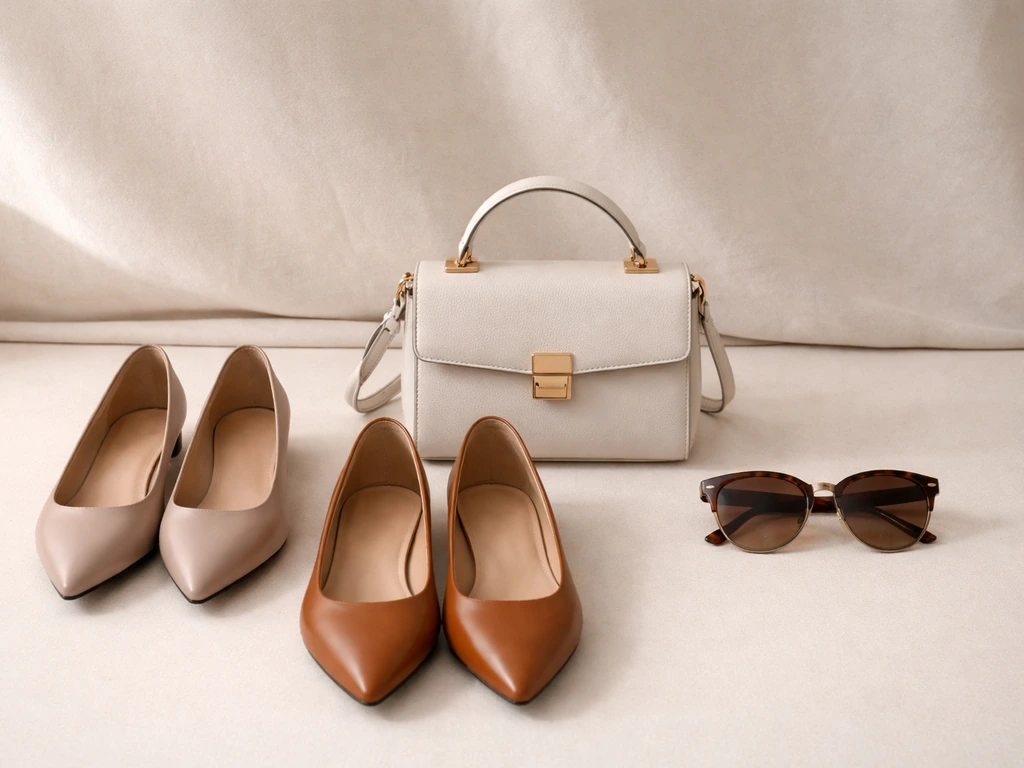
The brand sells shoes, bags, eyewear, accessories, and costume jewellery. Footwear is the core category and the brand's original identity, but bags have grown into a major revenue driver. The pricing strategy is deliberate: products sit above high-street fast fashion but well below European luxury brands, which gives them a wide addressable market across emerging and developed Asian economies where aspirational middle-class spending is growing fast.
Distribution: stores, e-commerce, and global reach
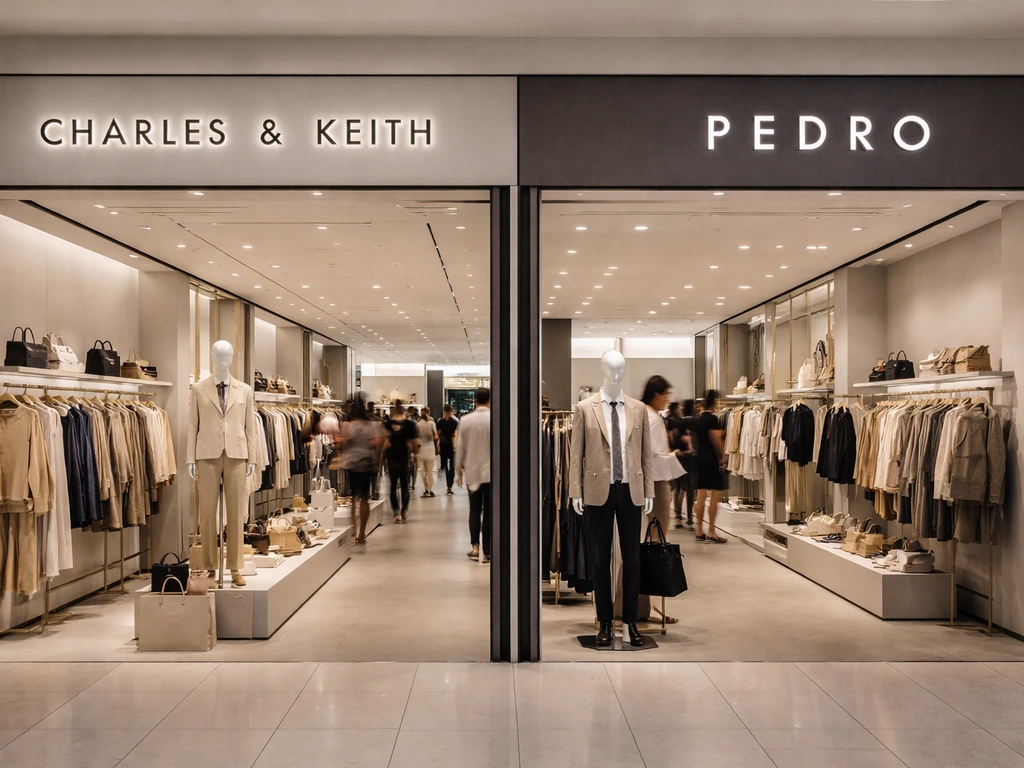
The group operates more than 700 stores under two brands across 30-plus countries, according to its own 2025 Code of Conduct documentation. That store footprint is a significant capital and revenue base on its own. Charles & Keith was also an early mover in e-commerce for a fashion retailer of its type, launching its online store in 2004, well ahead of most competitors in Southeast Asia. Recent expansion milestones include opening its first flagship in South Korea in July 2023, signaling continued push into North Asian markets. Inside Retail Asia reports that Charles & Keith opened its first flagship store in South Korea on July 12, 2023. Asia Pacific and the Middle East remain the strongest revenue regions.
The two-brand structure
The group operates two distinct brands: Charles & Keith (the flagship, positioned slightly higher) and Pedro (more casual, targeting a younger demographic). Running parallel brands under one holding structure allows the group to capture a wider price range and customer segment without cannibalizing the main brand's positioning. This dual-brand model is a meaningful revenue diversification that valuation models should account for.
The financial milestones that shaped today's valuation

A few key events define how the company got to where it is today from a financial perspective.
- 1996: Charles and Keith Wong open the first store in Singapore's Amara Shopping Centre, bootstrapped from a modest retail background in the family business.
- 2004: E-commerce launches, giving the brand a digital revenue channel earlier than most regional competitors.
- 2011: L Capital Asia (LVMH's PE arm) acquires a 20% stake for more than US$30 million, the only hard valuation anchor publicly available. This implies a rough company value of around US$150 million at the time.
- Post-2011: The Wong brothers buy back the L Capital Asia stake, returning full family ownership. This matters because it removes any outside shareholder pressure toward an IPO or external disclosure.
- 2023: First South Korea flagship opens (July 12), part of a continued push into premium Asian markets beyond the brand's Southeast Asian core.
- 2024: Forbes Singapore's 50 Richest ranks the Wong brothers at #35 with a combined net worth of approximately US$1.3 billion, the most recent credible personal wealth estimate available.
The trajectory here is straightforward: a Singapore-founded retailer that took strategic outside capital at the right moment, used it to scale internationally, then reclaimed full ownership. That buyback is actually one reason why the company remains harder to value today: there's no external minority stakeholder with a recent price on the books.
What "net worth" can and can't tell you about a fashion retailer
Net worth as a concept works cleanly for individuals: assets minus liabilities. For a private company like Charles & Keith, the term gets used loosely to mean several different things, and it's worth knowing which one you're looking at.
| Term | What it actually means | Reliability for Charles & Keith |
|---|---|---|
| Founder net worth | Personal wealth of the Wong brothers, with the company as the primary asset | Most reliable: anchored to Forbes rankings (~US$1.3B, 2024) |
| Enterprise value | Market value of all assets (equity + debt), what you'd pay to buy the whole company | Not publicly available; estimated only |
| Equity value / company net worth | Total equity value, roughly enterprise value minus net debt | Not publicly available; sometimes back-calculated from the 2011 stake sale |
| Net asset value (book value) | Assets minus liabilities on the balance sheet | Not publicly disclosed for a private group |
| Brand value | Estimated value of the brand name itself (e.g., from brand valuation firms) | Occasionally cited but methodology varies widely |
Most websites that give you a single "Charles & Keith net worth" number are either citing the founders' personal wealth estimate or extrapolating from the 2011 stake transaction. In particular, the Charles Wong net worth estimate most often traces back to founder wealth figures rather than a verified company valuation. If you're specifically trying to find Charles Ungurean net worth, the same caution applies: many numbers online refer to personal wealth rather than a private company's enterprise value.
This helps explain why a Charles Heung net worth figure you see online is usually tied to founders or other older valuation anchors rather than the current enterprise value of the company Charles & Keith net worth. If you meant the Charles Heung net worth claims you see online, this article explains why those numbers are usually based on older founder wealth anchors rather than current enterprise value. Neither gives you the current company enterprise value.
That doesn't make the numbers useless, but you should treat any figure below US$1 billion for the company today as almost certainly an underestimate given the scale of operations (700-plus stores, dual brands, global e-commerce), and you should treat any figure above US$3 billion as speculative without supporting evidence.
How to verify the estimate yourself

Because Charles & Keith is private, you won't find a definitive answer from a single source. But you can triangulate a credible range using publicly available information. Here's how to do it practically.
Step 1: Start with Forbes and Bloomberg for founder wealth
The Forbes Singapore's 50 Richest list is updated annually (typically published in the second half of each year). Search for "Wong Siu Hoong" or "Charles Wong Keith Wong Forbes" to find the most current entry. Bloomberg Billionaires tracks a similar universe. These are your most reliable anchors for personal wealth.
Step 2: Check Singapore corporate filings
Charles & Keith is headquartered in Singapore. Singapore's Accounting and Corporate Regulatory Authority (ACRA) maintains a public registry (BizFile+) where some financial details for Singapore-registered companies may be filed. Search for "Charles & Keith" or the holding entity name. Private companies in Singapore do have some filing obligations, though the detail available varies based on company size and structure. This won't give you a full income statement, but it may surface registered capital figures or director details that confirm the holding structure.
Step 3: Look for transaction news and deal databases
If any new funding round, acquisition, or stake sale occurs, it will typically be reported by The Business Times (Singapore), Deal Street Asia, or Bloomberg. Set a Google Alert for "Charles & Keith" and "Charles & Keith Group" to catch any new financial events. The 2011 L Capital Asia deal remains the only confirmed transaction anchor in public reporting; if a new one surfaces, it will immediately reset the valuation conversation.
Step 4: Use revenue multiples as a sanity check
Fashion retailers with 700-plus stores typically trade at revenue multiples of 1x to 3x (sometimes higher for premium brands with strong e-commerce). You won't find Charles & Keith's revenue publicly disclosed, but if any interviews or business reports cite approximate revenue figures, you can apply a reasonable multiple to estimate enterprise value. This is speculative, but it gives you a range to test whether a cited number is plausible.
Step 5: Treat aggregator sites with skepticism
Sites like Celebrity Net Worth or similar aggregators typically recycle older estimates without methodology transparency. They may cite the same 2011 stake deal or an old Forbes mention. Always cross-check with a primary or near-primary source (Forbes list, The Business Times, Bloomberg) before treating any figure as current. If a site can't tell you when and where the number comes from, the number is almost certainly stale or fabricated.
What a reasonable estimate looks like today
Given the 700-plus store network, dual-brand structure, global e-commerce presence, and the founders' combined personal wealth sitting at approximately US$1. 3 billion as of 2024, a reasonable range for the company's enterprise value today is somewhere between US$1 billion and US$2 billion. That is an estimate, not a verified figure. The 2011 stake sale implied roughly US$150 million at the time; the business has grown dramatically since.
The US$1. 3 billion personal wealth figure is the most defensible public anchor. If you see a dramatically different number online without a credible source cited, it's almost certainly either outdated or invented. For related context on other notable figures named Charles in the business and finance world, comparable wealth-building patterns through private ownership and family enterprise show up repeatedly across the region.
This same careful approach also helps when you're trying to interpret Charles and Keith Wong net worth figures you find online.
FAQ
Is Charles and Keith net worth the same as Charles and Keith Group’s company value?
No. Many sites blend the founders’ personal wealth with an implied company enterprise value. Because Charles and Keith is privately held, “net worth” for the brand is usually an estimate, while the founders’ figure is a personal-assets estimate.
Why do some websites show two very different Charles and Keith net worth numbers (for the same year)?
They are often using different definitions, one is personal net worth for the Wong brothers, the other is an inferred enterprise value for the business. Also, some pages reuse older anchors from the 2011 stake deal without updating for later growth.
If I see a Charles and Keith net worth under US$1 billion, should I treat it as wrong?
It’s likely too low for the current operating scale, since the business has a 700-plus store footprint and a dual-brand structure. It may be based on stale assumptions, such as revenue multiples applied to outdated numbers or an unreported “company value” that is really something else.
If I see a Charles and Keith net worth above US$3 billion, is that automatically incorrect?
Not necessarily, but it’s usually speculative without supporting evidence. At that level, you should expect a credible anchor such as a recent funding round, stake transaction, or disclosed revenue base used with transparent valuation logic.
How can I tell whether a number is based on the 2011 stake transaction or on founders’ wealth?
Check whether the article mentions the L Capital Asia 20% stake deal, or whether it cites Forbes-ranked personal wealth. If neither is referenced, the number is probably a recycle of older estimates rather than a fresh valuation.
What role does the stake buyback play in valuing Charles and Keith today?
When the founders buy back minority stakes, there is less publicly observable “market pricing” for equity. That makes current valuation estimates harder, because you no longer have an external investor’s recent implied price to anchor the company value.
Can Singapore company filings (ACRA BizFile+) confirm Charles and Keith net worth?
They can help confirm structure details, such as the holding entity and registered capital, but they typically do not provide enough to compute an accurate enterprise value. Treat filings as a validation tool, not a substitute for a valuation model with financial anchors.
Do revenue multiples work for Charles and Keith net worth estimates, and what’s the main limitation?
They can produce a sanity-check range if you have an approximate revenue figure, but the limitation is that revenue may be undisclosed or inconsistent across sources. Without a credible revenue base, the multiple only makes the estimate look precise.
What is the most reliable starting point for Charles and Keith net worth research?
Use a personal wealth anchor for the founders first (for example, a current Forbes-ranked entry), then treat any “company value” number as a separate estimate that should be justified with valuation logic or a recent transaction.
If the online number doesn’t say when it was measured, should I trust it?
Generally no. For private-company valuation, timing matters because the business can grow quickly. If the page does not state the year and the source methodology, assume it is outdated or unsupported.
What would count as a “reset” event that could change Charles and Keith net worth estimates?
A new funding round, a fresh stake sale, a merger or acquisition, or an IPO would provide a more current pricing anchor. After such an event, older estimates based on 2011 or older personal wealth figures can become materially inaccurate.
Is “Charles Wong net worth” likely to be the same as Charles and Keith net worth for the company?
No. “Charles Wong net worth” usually refers to personal wealth and may include the value of his stake in the business. The company enterprise value can differ because it relates to assets and liabilities at the business level, not just what the founder owns.
Next Article
Charles Wong Net Worth: Estimate, Sources, and What to Know
Evidence-based estimate of Charles Wong net worth, with sources, identity checks, and why figures vary over time.