
Charles K. Kao's net worth at the time of his death in 2018 was estimated at around $5 million, according to the limited secondary sources that have attempted to quantify it. That figure is almost certainly a rough approximation rather than a verified estate valuation, and it probably reflects a combination of career earnings from decades in academia and industry, prize money from major awards including the Nobel Prize, and any equity or compensation from executive roles. There are no published probate records or authoritative financial disclosures that confirm a precise number, so treat any single figure you find online as a ballpark, not a bank statement.
Charles K Kao Net Worth: Estimates, Sources, and Context

Marcus Rothwell
24 Jun 2026
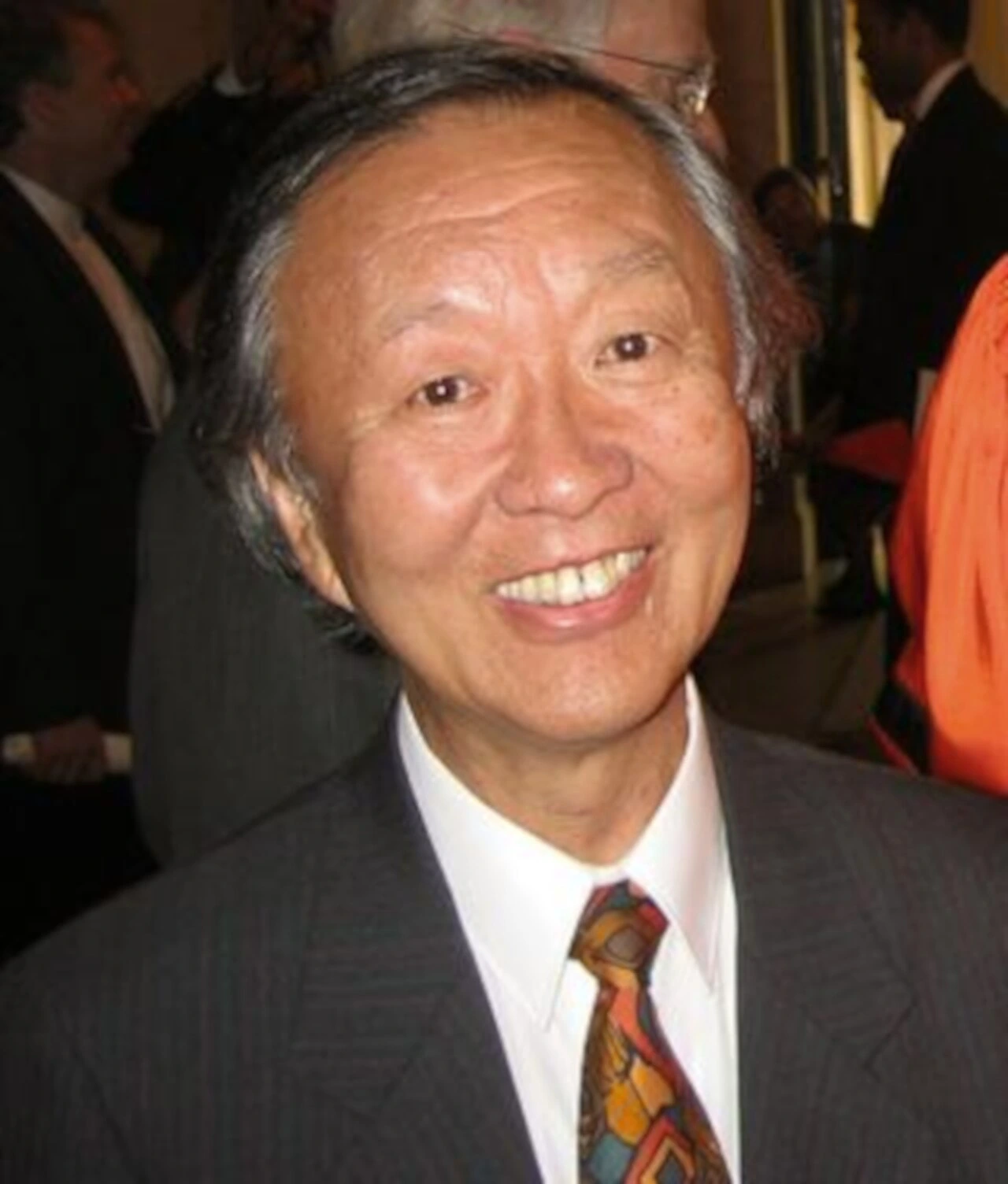
First, make sure you have the right Charles K. Kao

This matters more than it sounds. Search for 'Charles K. Kao net worth' and you will sometimes land on results about Charles Koch (the billionaire industrialist) or other figures whose names share initials. The Charles K. Kao this article covers is Kuen Charles Kao, the physicist born in Shanghai in 1933, educated in the UK, and awarded the 2009 Nobel Prize in Physics for his groundbreaking work on optical fiber communications. NobelPrize.org’s presentation and biography materials for the 2009 Physics Prize identify Kuen Charles Kao as the Nobel laureate and describe the basis for the award awarded the 2009 Nobel Prize in Physics. He died on September 23, 2018. He spent his career at Standard Telecommunication Laboratories (STL) in Harlow, England, later at ITT Corporation, and then served as Vice-Chancellor of the Chinese University of Hong Kong from 1987 to 1996. He is not to be confused with business figures like Charles Koch, and has no direct connection to fictional characters like Charles Foster Kane. Once you confirm you are looking at the right person, the financial picture becomes much clearer, even if it remains incomplete. These estimates can be different from other similar-looking figures’ net worth claims, so make sure you are matching the right person.
What the net worth estimates actually say
The only widely circulated estimate pegs Charles K. Kao's net worth at approximately $5 million. This comes from third-party aggregator sites, not from any official disclosure, estate filing, or reputable financial publication. The figure sits in a plausible range for a distinguished scientist who spent his career in well-compensated academic and corporate leadership roles, collected significant prize money, and had no publicly documented history of large-scale entrepreneurship or investment portfolios. It is not the kind of figure that signals dynastic wealth. For context, the Nobel Prize itself carried a cash award of 10 million Swedish kronor in 2009, which Kao shared equally with Willard Boyle and George E. Smith for a split prize. Kao's half of the Nobel cash component would have been approximately 5 million kronor, equivalent to roughly $700,000 to $750,000 at the exchange rates of the time. That prize alone represents a meaningful but not outsized portion of his estimated total.
It is also worth understanding what 'net worth' actually means for a historical figure like Kao. Net worth is assets minus liabilities at a given point in time. For a working scientist and academic, the bulk of that is likely to be residential property, retirement savings, investment accounts, and any remaining prize funds. It is not the same as lifetime earnings (which would be significantly higher when you factor in decades of salary, benefits, and bonuses) and not the same as liquid cash on hand. Kao spent his later years dealing with Alzheimer's disease, diagnosed in 2004, which likely had significant personal care costs. His wife, Gwen Kao, helped found the Charles K. Kao Foundation for Alzheimer's Disease, which raised funds publicly (including a gala that raised over HK$5 million) but operates entirely separately from his personal estate.
Where his wealth actually came from
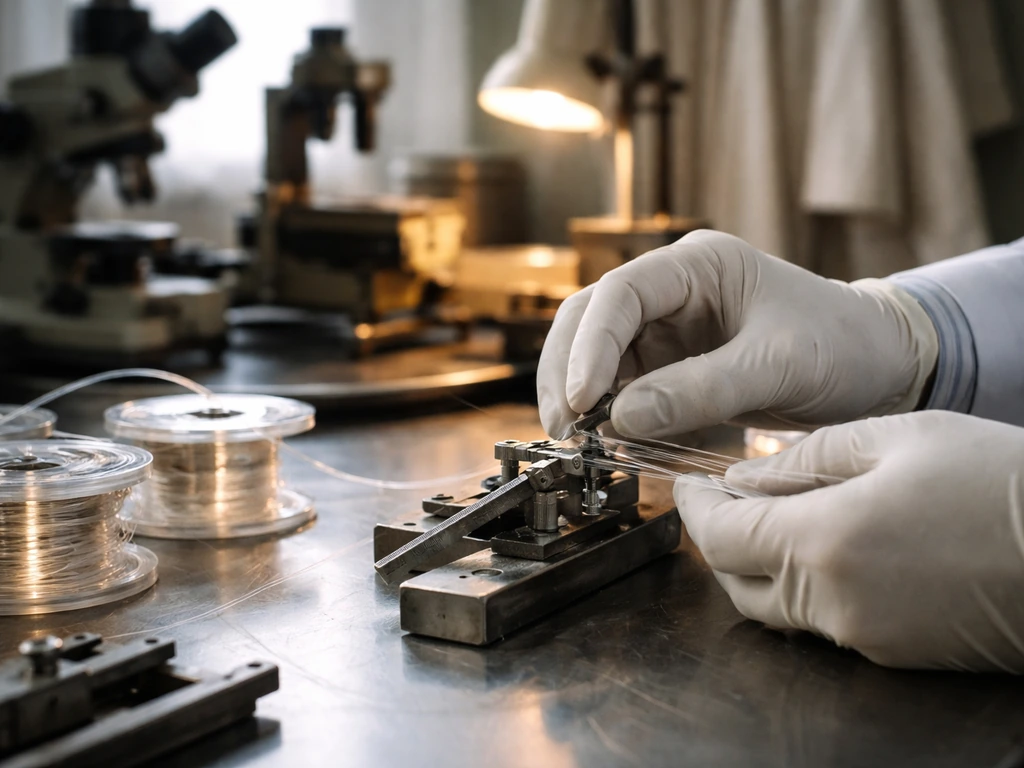
Kao's financial story is the story of a career-driven scientist who climbed into serious leadership roles rather than staying purely in research. That transition matters for understanding his wealth.
Corporate and academic career earnings
Kao joined Standard Telecommunication Laboratories in the late 1950s and worked there through the pivotal period when he produced his landmark 1966 paper proposing that glass fibers with sufficiently low impurity levels could transmit light over long distances. He rose to senior research roles at STL and then at ITT Corporation, where he eventually held executive-level positions. Corporate research executives at major telecoms firms in the 1970s and 1980s earned substantial salaries by any measure, and executive compensation at large multinationals like ITT would have included stock options and performance bonuses in addition to base pay. He later became Vice-Chancellor (essentially president) of the Chinese University of Hong Kong, a role that carries significant institutional compensation in one of the world's most expensive cities. Taken together, four-plus decades of senior-level employment in both corporate and academic settings represents the strongest and most consistent wealth-building channel in his profile.
Executive and board roles after CUHK

After stepping down from CUHK in 1996, Kao held leadership roles in the technology and business sector. He served as Chairman and CEO of Transtech Services Group Limited, a role documented in the company's Hong Kong Stock Exchange filings from around 1999 to 2000. Board and executive roles like this typically include compensation packages with cash retainers and sometimes equity stakes. The specific terms of his Transtech arrangement are not publicly detailed in sources I have been able to identify, but such roles routinely add meaningfully to a senior executive's net worth through both income and potential share appreciation.
Patents and intellectual property
Kao held patents, including US patents related to optical fiber design (such as one covering water-resistant high-strength fiber variants). However, for most academic and corporate researchers of his era, patents were typically assigned to the employer rather than the individual. This means that STL, ITT, or CUHK would have held the commercial rights, not Kao personally. Any royalty income from his personal patents would have been modest unless specific licensing arrangements existed. Patent records can be searched through USPTO, Google Patents, and Justia, but there is no public evidence that Kao received substantial personal royalty streams from his fiber optics intellectual property.
Prize money and honoraria
Beyond the Nobel Prize, Kao received the 1996 Japan Prize, which also carries a significant cash component. The Japan Prize Foundation awards each prize laureate a medal, a certificate, and a cash prize (historically around 50 million yen per prize category, shared between laureates). That is a meaningful sum. He also received numerous other honors over his career, many of which include honoraria or financial awards. Taken together, prize and award income likely contributed several million dollars in today's terms to his total lifetime earnings.
Major financial milestones at a glance
| Milestone | Year | Estimated Financial Impact |
|---|---|---|
| Senior research/executive roles at STL and ITT | 1960s–1980s | Primary career income over ~25 years; likely the largest wealth-building period |
| Vice-Chancellor, Chinese University of Hong Kong | 1987–1996 | Senior executive academic salary in Hong Kong; significant compensation package |
| Japan Prize in Physics | 1996 | Cash honorarium; Japan Prize historically awards ~50 million yen per category |
| Chairman and CEO, Transtech Services Group | Late 1990s–2000s | Board/executive compensation; equity exposure possible but terms undisclosed |
| Nobel Prize in Physics (half share) | 2009 | |
| Alzheimer's diagnosis and care costs | 2004 onward | Significant personal medical/care expenses reducing net assets over time |
Why net worth data on historical tech figures is so unreliable
Charles K. Kao sits in a category that wealth-tracking sites handle poorly: the distinguished scientist who was compensated as an executive but never had a public company valuation, celebrity endorsement income, or a Forbes-tracked portfolio. Sites like CelebrityNetWorth are built primarily for entertainment and business figures whose earnings are partially disclosed through box office data, SEC filings, or sports contracts. For scientists, the data pipeline simply does not exist in the same way. The $5 million estimate floating around online is almost certainly a back-of-the-envelope calculation based on known prize money plus an assumed career salary trajectory, not a documented assessment. There are no public estate records, no shareholder disclosures, and no reputable financial journalism that has reported on his personal wealth in any detail.
There is also the broader problem of name confusion. If you search poorly, you can end up reading about the wrong person entirely. Some searches for 'Charles K. net worth' will surface Charles Koch (net worth in the tens of billions), which has no relation to Charles K. Kao whatsoever. This kind of search noise is common across the 'Charles K.' name space, and it inflates or distorts impressions of what Kao was actually worth. It is worth noting that other prominent figures in the broader 'Charles K.' category, such as Charles Kettering or the investor-side Charles R. If you are comparing net worth estimates for different scientists and innovators, the Charles Kettering net worth discussion is a useful contrast point Charles Ketering. Kaye, have their own wealth histories that are equally distinct and should not be conflated.
How to verify the best available figures today

If you want to get as close to a reliable number as possible, here is a practical checklist of sources to check and how to use them.
- Start with NobelPrize.org. The official Nobel biography and facts pages are the gold standard for confirming Kao's identity, career timeline, and prize details. The prize money from the Nobel is the most precisely documented component of his wealth.
- Check the Japan Prize Foundation's official records for the 1996 prize. The Foundation's website lists laureates and prize details; the cash component is stated there or in press materials from the time.
- Search HKEX filings (hkexnews.hk) for Transtech Services Group annual reports from 1999 to 2002. These filings may include director remuneration disclosures, which would give you a documented compensation figure for that period.
- Search USPTO and Google Patents (patents.google.com) for patents listing 'Charles Kao' as inventor. Cross-reference assignee names to determine if patents were held personally or by employers. Justia's patent index is a useful starting point for compiling a list.
- Check reputable biographies and institutional profiles. Britannica's entry on Kao and his Nature obituary provide career context that can help you calibrate salary ranges by role and era, even if they do not give exact figures.
- Treat aggregator sites like CelebrityNetWorth or similar platforms as rough starting points only, not verified data. Always ask: what is this site's cited source? If there is no citation, the figure is speculative.
- Look for any Hong Kong probate or estate records if they are publicly accessible, as Kao lived in Hong Kong for much of his later life. Hong Kong's Probate Registry is a public body, but accessing historical records remotely can be limited.
- Avoid Reddit and fan forums for financial facts. These sources reflect public perception and anecdote, not documented wealth data, and are best used only to understand how public narratives are forming around a figure.
The bottom line on Charles K. Kao's net worth
The most honest answer is this: Charles K. Kao was a well-compensated scientist and executive whose net worth was likely in the low-to-mid single-digit millions of dollars, with $5 million as a reasonable (if unverified) estimate. He was not a billionaire or a technology tycoon in the financial sense, even though his contributions to optical fiber communications were arguably worth trillions of dollars to the global economy. His wealth came from a long, distinguished career rather than from entrepreneurial upside or investment portfolios. The Nobel Prize added a documented lump sum in the late career, and major corporate and academic leadership roles provided steady, substantial income across several decades. What is missing is any rigorous public documentation of his personal finances, which means anyone who tells you they have the exact number is probably guessing. The $5 million figure is plausible, the methodology behind it is opaque, and a careful researcher should treat it as a reasonable order of magnitude rather than an established fact.
FAQ
How can I tell whether a “Charles K. Kao net worth” result is talking about the right person?
Check at least two identifiers, such as Nobel Prize (Physics, 2009), Chinese University of Hong Kong vice-chancellor role (1987 to 1996), and the death date (September 23, 2018). If the page mentions a billionaire, investment firm, or unrelated business controversies, it is likely Charles Koch or another similarly named figure.
Why do online net worth numbers for Charles K. Kao often vary even when they cite “the same” $5 million figure?
Most sites use different assumptions for salary versus prize money, and they may inflate or deflate assets for things that are unknown (home value, retirement savings, taxes, and long-term care costs). Without probate or financial disclosures, even credible-sounding methods become guesswork, so spreads are common.
Does the Nobel Prize payout mean Charles K. Kao’s net worth should be close to $700,000?
No. The Nobel cash component is only one measurable lump sum, and it is shared among laureates. Net worth also includes long-term assets built over decades (salary, retirement accounts, investments, and possibly real estate), minus liabilities (including medical and care expenses late in life).
Could he have earned significant royalties from his optical fiber patents?
It is possible, but not evidenced publicly. For researchers of his era, patents were often assigned to employers, which usually means royalties, if any, flow through the institution. Without documentation of licensing or personal royalty payments, any large royalty-based net worth claim is speculative.
How should I interpret “net worth” versus “lifetime earnings” when reading these estimates?
Net worth is a snapshot (assets minus liabilities) at a specific time, often the end of life for these stories. Lifetime earnings are the total income over a career and can be much higher. A person can have high earnings while still leaving a modest net worth due to taxes, lifestyle costs, caregiving, and debt.
Do Alzheimer-related care costs affect reported net worth estimates for Charles K. Kao?
They can. The article notes his later-years Alzheimer diagnosis and the likelihood of substantial personal care costs. Even if income was high earlier, long-duration medical and caregiving expenses can materially reduce net assets compared with a “career earnings minus prizes” back-of-the-envelope estimate.
What role does his wife’s Alzheimer's foundation play in his personal wealth reporting?
The Charles K. Kao Foundation is separate from his personal estate. Money raised publicly for the foundation should not automatically be treated as his assets. Net worth estimates that mix foundation fundraising with personal wealth are usually misleading.
If there are no probate records publicly available, what is the next-best evidence to check?
Look for reputable, primary or near-primary sources that establish income context, such as corporate filings (where his executive roles are discussed), institutional biographies, and award documentation for prize amounts. These do not produce a final net worth, but they let you bound assumptions more responsibly than aggregator sites.
How can I avoid confusing Charles K. Kao with other “Charles K.” wealth pages?
Use exclusion cues. For example, Charles Koch content will often mention large-scale business holdings, political activity, or billionaire rankings. Also compare geography and career milestones, such as Shanghai-born physicist versus US industrialist or investor backgrounds.
What would make an estimate of “exact net worth” especially unreliable for a historical scientist like Kao?
Any claim to an “exact number” without probate, estate filings, or verified asset valuations. Since there is no authoritative disclosure mentioned in the article, certainty usually signals a fabricated or overly aggressive interpolation from prizes and assumed salaries rather than documented accounting.
Next Article
Charles Kaye Net Worth: Estimate Range and How to Verify
Estimate range for Charles Kaye net worth, how it’s calculated, why sites differ, and steps to verify with sources.